Knowledge Base • 8 Min Read
Cold Foil Printing: The Ultimate Guide for Packaging
Table of Contents
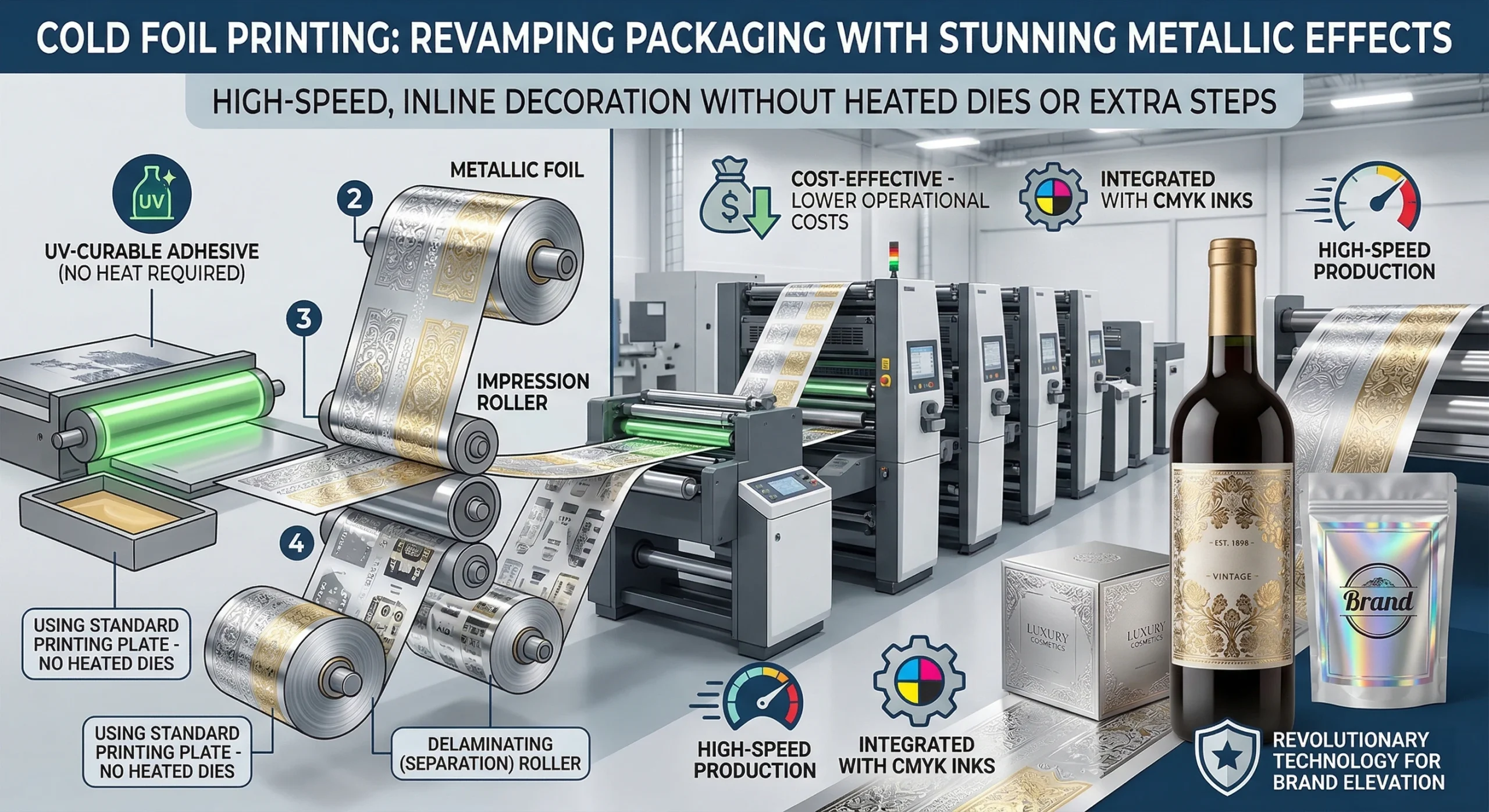
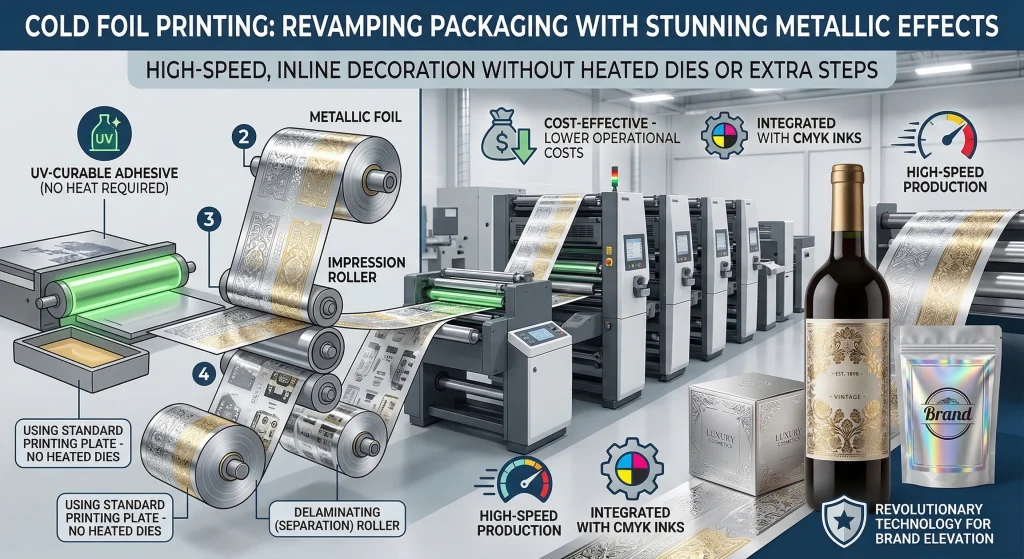
Unlike traditional methods, cold foil printing applies a metallic foil to a substrate using a UV-curable adhesive and a standard printing plate. There are no heated dies required. This allows for seamless, high-speed inline foiling directly alongside your standard CMYK inks.
The Step-by-Step Cold Foiling Process
The magic of this technique lies in its simplicity and speed. It is primarily integrated into flexographic printing or offset presses. Click through the interactive steps below to understand the mechanics:
1. Printing the UV Adhesive
The process begins by printing a specialized UV-curable adhesive onto the substrate (like paper or plastic film). The adhesive is applied using a standard flexo printing plate, mirroring the exact design where you want the foil to appear.
2. Applying the Foil
Immediately after the adhesive is applied, the silver or gold cold foil roll is brought into contact with the substrate through a nip roller. The foil sticks only to the areas where the wet adhesive was printed.
3. UV Curing the Bond
The substrate, now carrying the foil, passes under a powerful UV (Ultraviolet) lamp. The UV light passes through the foil layers and instantly cures (hardens) the adhesive, creating a permanent bond with the foil.
4. Stripping the Excess
Finally, the web separates. The foil that was bonded by the cured adhesive remains on your packaging, while the excess, un-glued foil is stripped away and rewound as waste. The result? A perfect metallic print ready for overprinting.
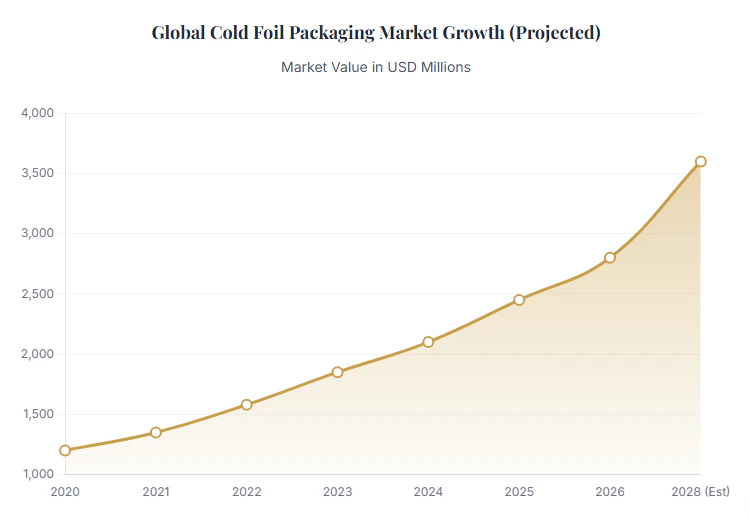
The Rise of Inline Foiling in Packaging
Cold Foil vs. Hot Stamping
Choosing the right technique depends on your specific project. Here is a quick comparison to help you decide:
| Feature | Cold Foil Printing | Hot Stamping |
|---|---|---|
| Tooling Required | ✓ Standard printing plate (Cheap) | ✗ Engraved metal dies (Expensive) |
| Production Speed | High-speed inline | Slower, often offline |
| Best For | Gradients, fine lines, overprinting | Deep embossing, textured papers |
| Heat Sensitivity | Excellent for thin shrink sleeves | Can melt thin plastic films |
Top Benefits of Using Cold Foil for Packaging
✦ Endless Color Combinations via Overprinting
You only need one silver cold foil roll. By overprinting CMYK inks directly on top of the applied silver foil, you can create thousands of metallic shades, including gold, bronze, or metallic blue, in a single pass.
✦ Cost Efficiency on Short to Medium Runs
Because there are no expensive brass or magnesium dies to engrave, setup costs are drastically reduced.
✦ Perfect for Heat-Sensitive Substrates
Since it uses UV light instead of heat, it is the safest choice for thin shrink sleeves, pouches, and flexible plastics that would otherwise warp under a hot stamping die.
Ready to test it on your machines?
As a leading manufacturer, we provide free sample rolls engineered to your specific press and adhesive requirements.