By Liangyu Laser Technical Team | 18-min read
Hot Stamping Foil Price per Kg: 2026 U.S. Cost Guide
Table of Contents
- 1. What Makes Foil Printing Feel Premium?
- 2. How Does Foil Printing Work on Labels and Packaging?
- 3. Which Foil Finish Should You Choose?
- 4. How Do Substrates Change the Result?
- 5. What Artwork Details Matter Most?
- 6. Which Is Better?
- 7. What Quality Tests Should Buyers Request?
- 8. How Should Buyers Specify a Foil Printing Project?
- 9. Common Mistakes That Make Foil Printing Look Cheap
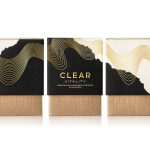
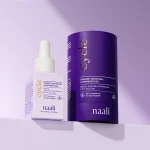
Foil printing for premium labels and packaging is the process of applying metallic, pigment, holographic, matte, or specialty foil effects to printed materials so a product looks more valuable, tactile, and shelf-ready. The best results come from matching foil type, substrate, artwork detail, stamping method, and durability requirements before production begins.
For premium packaging, foil printing is not just decoration. It is a buying signal. The strongest desig
What Makes Foil Printing Feel Premium?
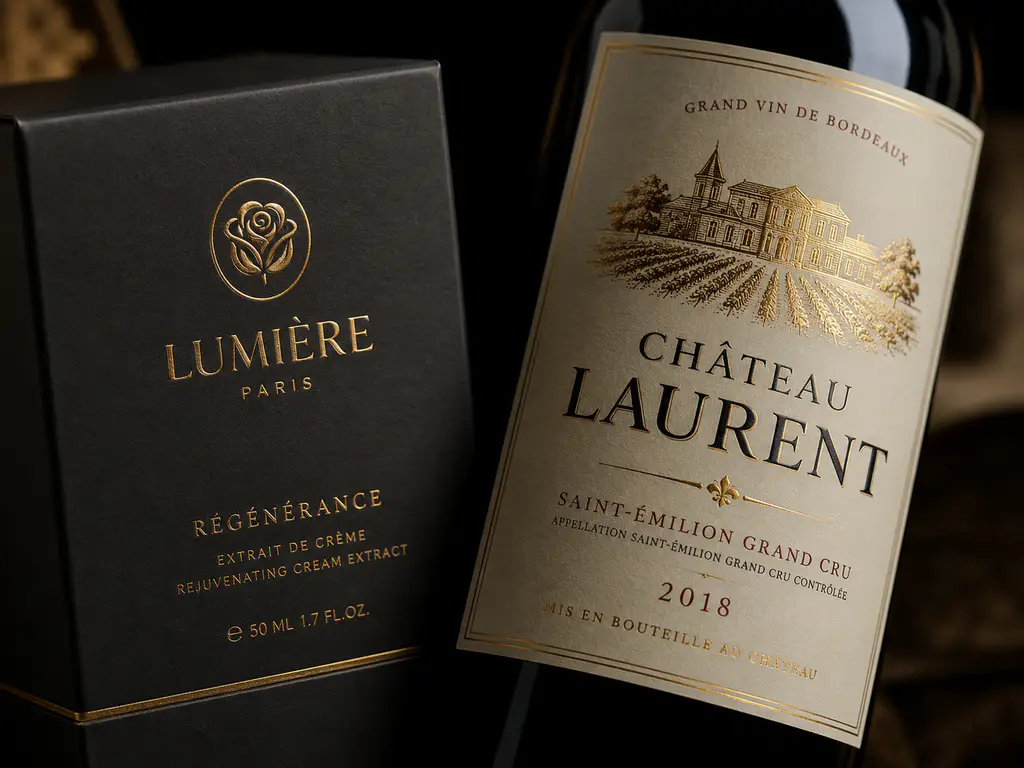
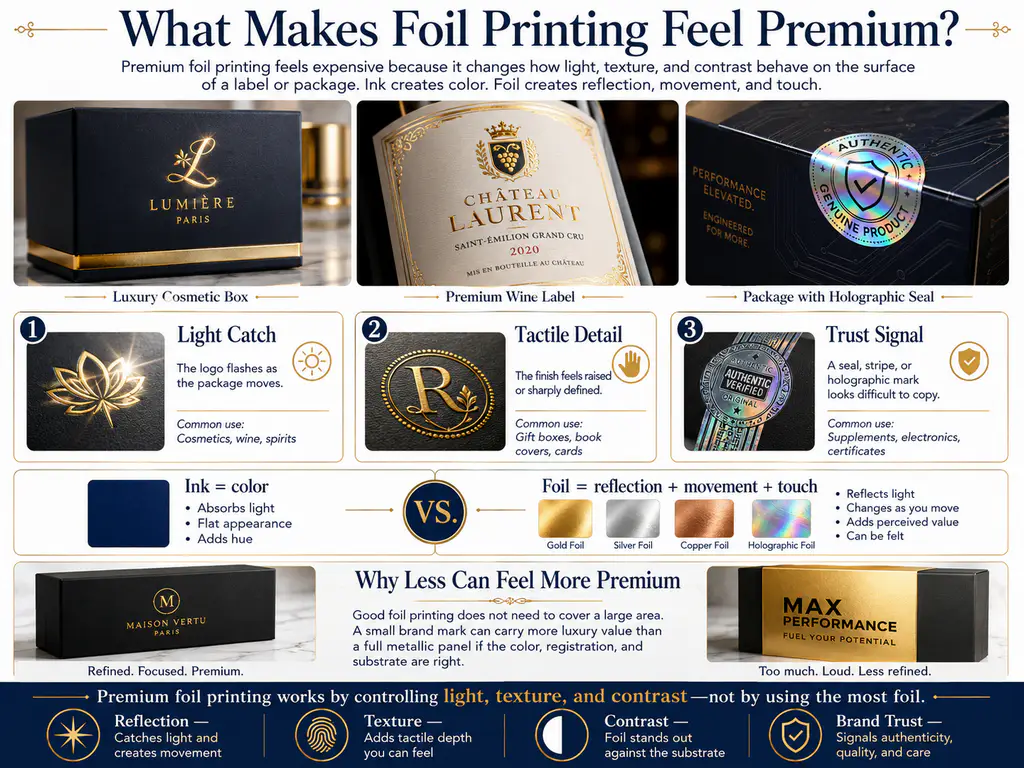
Premium foil printing feels expensive because it changes how light, texture, and contrast behave on the surface of a label or package. Ink creates color. Foil creates reflection, movement, and touch.
In practical terms, foil printing for premium labels and packaging works best when it adds one of three values:
| Premium Value | What the Customer Notices | Common Use |
|---|---|---|
| Light catch | The logo flashes as the package moves | Cosmetics, wine, spirits |
| Tactile detail | The finish feels raised or sharply defined | Gift boxes, book covers, cards |
| Trust signal | A seal, stripe, or holographic mark looks difficult to copy | Supplements, electronics, certificates |
Good foil printing does not need to cover a large area. A small brand mark can carry more luxury value than a full metallic panel if the color, registration, and substrate are right.
For brand owners, foil printing for premium labels and packaging is most effective when the shine supports a clear brand hierarchy instead of covering every available surface.
How Does Foil Printing Work on Labels and Packaging?
Foil printing transfers a decorative layer from a carrier film onto a substrate by using heat, pressure, adhesive chemistry, or toner-reactive bonding, depending on the process. The result is a metallic or pigmented effect that sits on top of paper, film, board, plastic, leather, or laminated material.
Most premium label and packaging projects use one of these methods:
| Method | How It Works | Best For | Watch Out For |
|---|---|---|---|
| Hot foil stamping | Heated die presses foil onto the surface | Luxury cartons, wine labels, cosmetics | Die cost and setup time |
| Cold foil printing | UV adhesive transfers foil inline before overprinting | High-speed labels, flexo work | Needs good adhesive and curing control |
| Digital foil | Toner or digital adhesive bonds foil without a die | Short runs, personalization, prototypes | Not always equal to hot foil durability |
| Holographic foil printing | Micro-embossed foil creates rainbow or security effects | Anti-counterfeit seals, special editions | Pattern selection and registration |
Which Foil Finish Should You Choose?
The right foil finish depends on the brand personality, product category, substrate, and shelf environment. Gold is classic, but premium packaging now uses a wider visual language: champagne, rose gold, brushed silver, matte graphite, pigment white, transparent gloss, and custom holographic patterns.
Use this quick selection table when planning foil printing for premium labels and packaging:
| Brand Goal | Recommended Finish | Why It Works |
|---|---|---|
| Classic luxury | Warm gold, champagne gold | Familiar premium cue for cosmetics, spirits, gifts |
| Modern minimalism | Matte silver, satin nickel, graphite | Premium without looking flashy |
| Feminine beauty | Rose gold, soft copper, pearl pigment | Works well on skincare and fragrance packaging |
| Security and authenticity | Holographic foil, custom diffraction pattern | Adds motion and harder-to-copy detail |
| Eco-positioned premium | Subtle matte foil on uncoated or textured board | Keeps the design restrained and material-led |
| Bold shelf impact | High-gloss metallic or rainbow holographic | Useful for limited editions and youth categories |
How Do Substrates Change the Result?
Substrate choice can make or break foil printing. The same foil may look crisp on coated paper, muted on soft-touch lamination, patchy on textured board, and weak on untreated plastic. Premium results come from testing the exact production material, not a similar sample from a swatch book.
Common substrate considerations:
| Substrate | Foil Printing Behavior | Practical Advice |
|---|---|---|
| Coated paper | Sharp, bright, predictable | Good starting point for labels and cartons |
| Uncoated paper | Softer reflection, more absorbent surface | Use stronger pressure and test fine details |
| Textured board | Elegant but can cause skips in low areas | Avoid tiny reverse text and large flat foil blocks |
| Soft-touch lamination | Luxury feel but adhesion can vary | Request alcohol, rub, and tape tests |
| PP, PE, PET, ABS plastic | Needs surface energy and adhesive matching | Review hot stamping foil for plastic |
| Synthetic labels | Durable but heat-sensitive | Test curl, shrinkage, and edge definition |
What Artwork Details Matter Most?
Artwork for foil printing should be designed for transfer, not only for screen viewing. Hairlines, reverse gaps, dense coverage, and registration tolerances all affect the final result.
For foil printing for premium labels and packaging, prepare artwork with these rules:
| Artwork Element | Recommended Practice |
|---|---|
| Fine lines | Keep production lines realistic; test below 0.15 mm |
| Reverse text | Avoid extremely small knockout type inside foil areas |
| Large solid blocks | Break with texture or pattern to reduce pinholes and pressure marks |
| Borders | Allow enough tolerance for die alignment and trimming |
| Overprinting | Confirm whether ink will print over foil or foil over ink |
| Embossing combination | Align foil and embossing dies carefully to avoid shadowing |
Designers often ask whether foil should be used on the logo, pattern, or product name. The safest answer: foil the brand asset first.
Hot Foil, Cold Foil, or Digital Foil: Which Is Better?
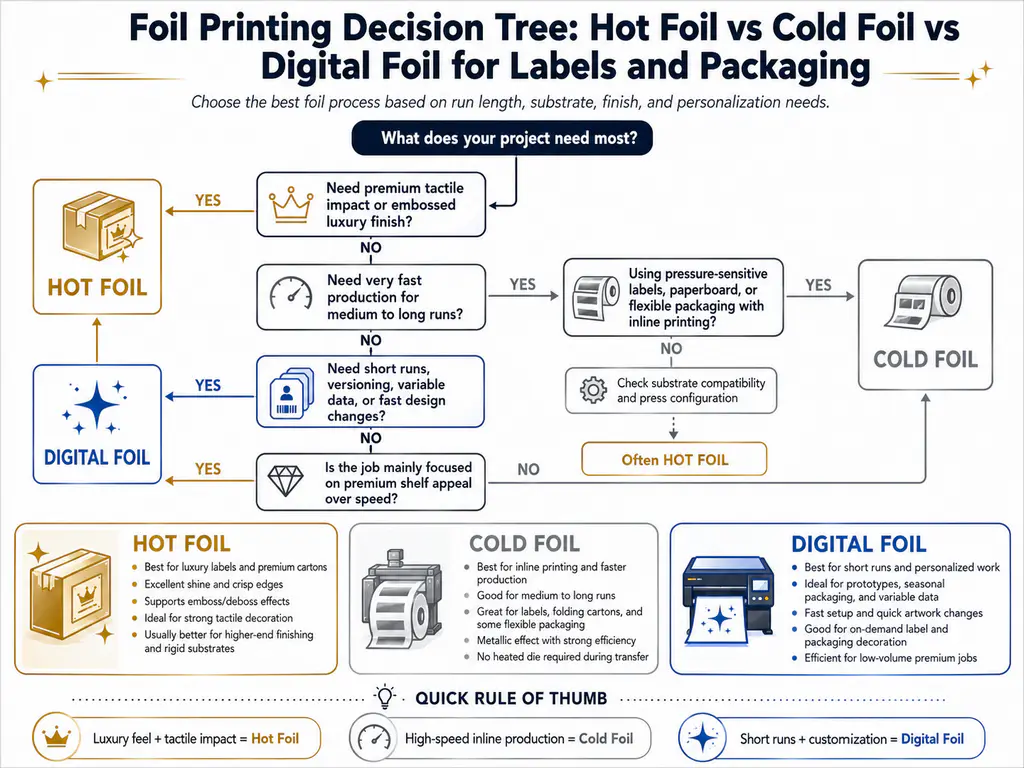
Hot foil is usually the best choice for the richest premium feel. Cold foil is strong for high-speed label production and overprinted metallic effects. Digital foil is attractive for short runs, prototypes, and variable designs.
| Decision Factor | Hot Foil | Cold Foil | Digital Foil |
|---|---|---|---|
| Luxury depth | Excellent | Good | Good for short runs |
| Fine detail | Excellent with the right die | Good | Varies by machine |
| Setup cost | Higher | Medium | Low |
| Speed | Medium | High | Medium |
| Personalization | Poor | Limited | Strong |
| Best use | Premium cartons, wine labels, cosmetics | Narrow-web labels | Small batch labels, events, prototypes |
What Quality Tests Should Buyers Request?
Premium packaging should be judged after handling, shipping, filling, and retail exposure, not only by the first sample photo.
Ask suppliers to test:
- Tape adhesion after stamping
- Dry and wet rub resistance
- Alcohol or perfume resistance for cosmetic packaging
- Scratch resistance during carton packing
- Color consistency between batches
- Registration tolerance for foil plus embossing
- Edge sharpness under magnification
- Curl and shrinkage on synthetic labels
How Should Buyers Specify a Foil Printing Project?
A clear specification reduces sampling delays and prevents suppliers from guessing. Send the substrate, design file, product use, expected environment, target finish, roll or sheet dimensions, and any compliance or durability requirement.
A practical brief for foil printing for premium labels and packaging should include:
| Specification Item | Example |
|---|---|
| Application | 50 ml perfume carton logo and border |
| Substrate | 350 gsm coated board with matte lamination |
| Foil effect | Satin champagne gold, not mirror yellow gold |
| Process | Hot foil stamping with embossing |
| Detail | 0.2 mm lines, 5 pt reverse text avoided |
| Durability | Alcohol vapor and rub resistance required |
| Quantity | 30,000 cartons plus 500 pre-production samples |
| Approval | Lab dip, machine trial, signed production standard |
Common Mistakes That Make Foil Printing Look Cheap
Foil should be planned with the substrate, print sequence, dieline, and brand hierarchy from the beginning.
Avoid these mistakes:
| Mistake | What Happens | Better Choice |
|---|---|---|
| Using too much foil | The design looks busy or low-cost | Foil only the strongest brand elements |
| Ignoring substrate texture | Missing spots and broken edges appear | Run a machine trial on final material |
| Choosing yellow gold blindly | The finish looks harsh under retail light | Compare warm, pale, champagne, and satin gold |
| Skipping durability tests | Foil scratches or flakes during shipping | Test rub, tape, alcohol, and humidity |
| Using tiny reverse text | Letters fill in or break | Increase size or use ink instead |
| Treating all suppliers as equal | Batch color and release vary | Ask for production standards and retained samples |
Premium work is about consistency: the same color, shine, release, and edge quality across every label, carton, and shipment.
FAQ
What is foil printing used for in premium labels and packaging?
Foil printing is used to add metallic, matte, pigment, holographic, or specialty effects to logos, borders, seals, product names, and decorative patterns. In premium labels and packaging, it helps products catch light, feel more valuable, and communicate quality before the customer opens the package.
Is hot foil better than digital foil for luxury packaging?
Hot foil usually gives the strongest luxury feel because it uses a heated die and pressure to create crisp, tactile transfer. Digital foil is better for short runs, personalization, and fast prototypes. The right choice depends on quantity, substrate, detail, budget, and durability needs.
Can foil printing work on plastic labels or plastic packaging?
Yes, but plastic needs careful foil and adhesive matching. PP, PE, PET, PVC, and ABS behave differently under heat and pressure. Surface energy, coating, and heat sensitivity should be tested before bulk production.
What color foil looks most premium?
Champagne gold, satin gold, rose gold, matte silver, graphite, and soft copper often look more premium than very yellow mirror gold. The best choice depends on the brand category, substrate color, retail lighting, and whether the product should feel classic, modern, feminine, technical, or secure.
Why does foil sometimes crack, flake, or miss areas?
Common causes include poor substrate compatibility, incorrect temperature, uneven pressure, wrong dwell time, weak adhesive, unsuitable lamination, worn dies, or artwork that is too fine for the material. A proper trial should test adhesion, rub resistance, and edge sharpness.
How many internal links should a premium foil blog page include?
For LiangyuFoil content, each new article should link to at least five relevant existing pages. Internal links help users explore related topics and help search engines understand the site’s topic structure.
Related Technical Resources:
📞 Contact our technical team → — Quote turnaround in 24 hours.