By Liangyu Laser Technical Team | 20-min read
Types of Hot Stamping Foil and How to Choose
Table of Contents
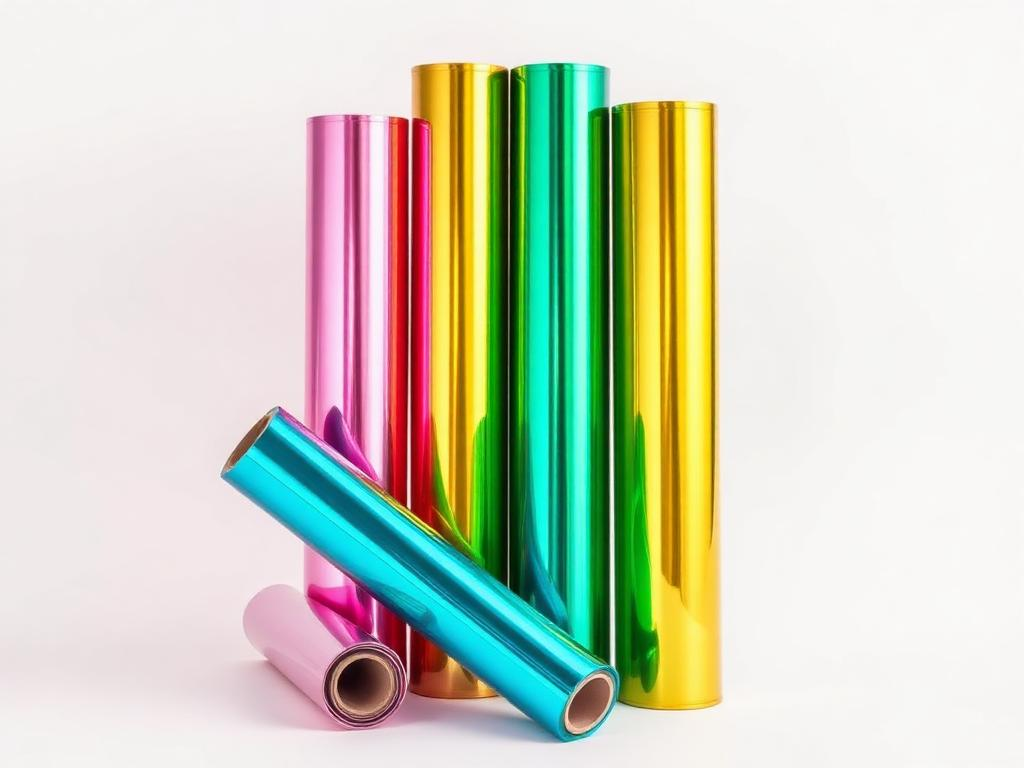
Hot stamping foils are commonly grouped into five families: metallic, pigment, holographic, matte or satin, and specialty foils. The right type depends on the required appearance, final substrate, artwork detail, stamping equipment and end-use resistance.
| Foil type | Appearance | Best applications | First sample check |
|---|---|---|---|
| Metallic | Mirror or colored metal | Cosmetics, wine, cartons | Tone and solid coverage |
| Pigment | Opaque non-metallic color | Dark packaging, text | Opacity and adhesion |
| Holographic | Rainbow or optical pattern | Promotions, security | Pattern clarity |
| Matte/Satin | Controlled low-glare metallic | Premium skincare, wine | Gloss consistency |
| Specialty | Pearl, brushed, transparent, pattern | Special decoration | Surface compatibility |
What Is Hot Stamping Foil?
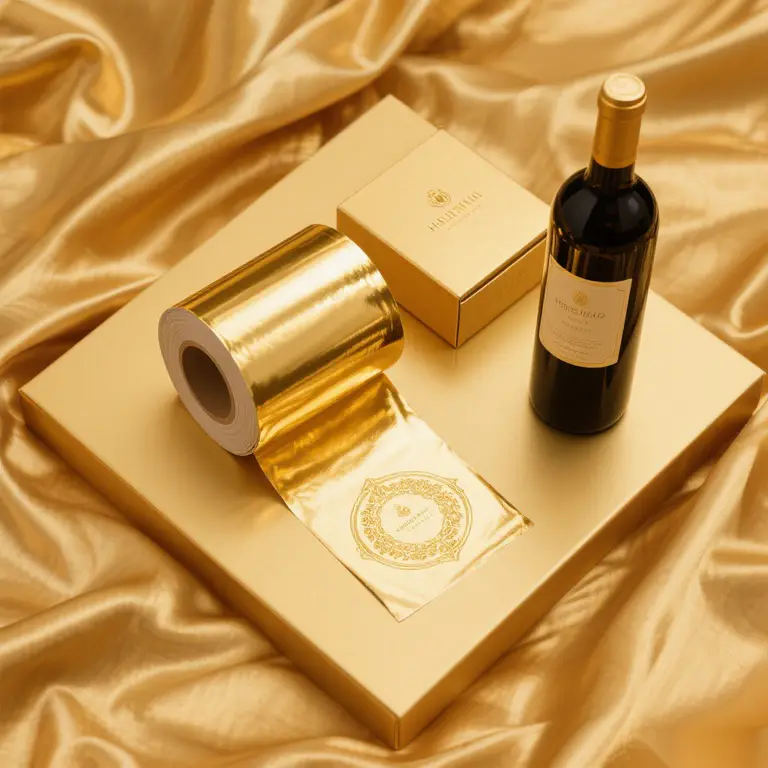
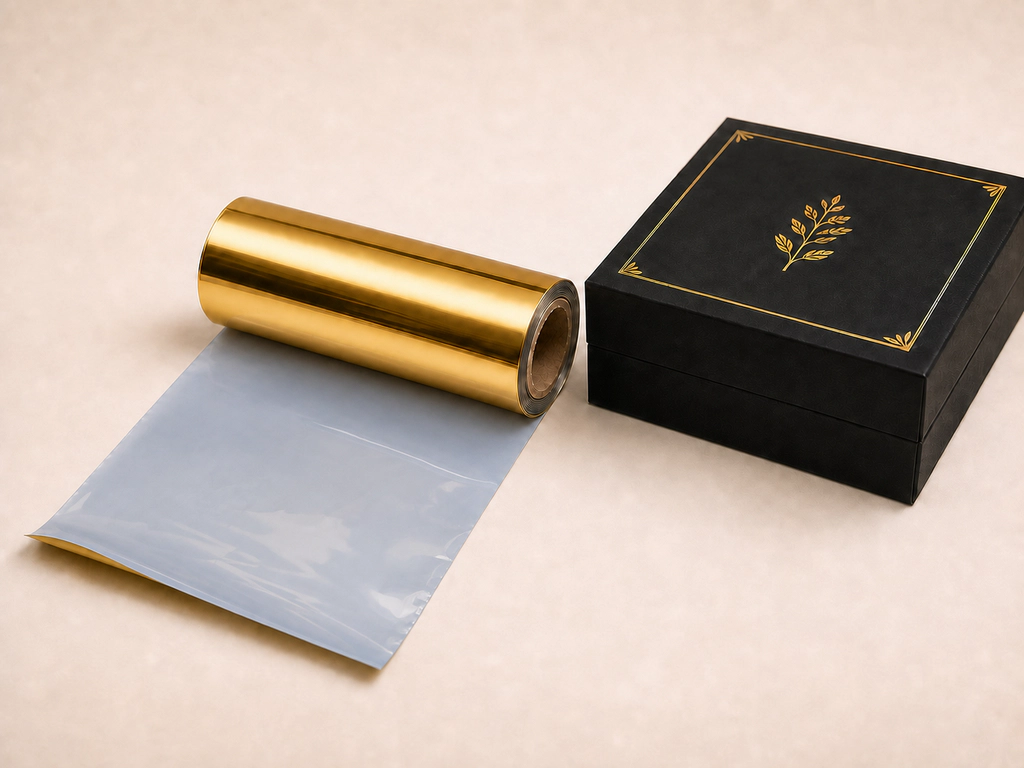
Hot stamping foil is a dry transfer film used to add metallic, pigment, holographic, matte, or special decorative effects to labels and packaging. It is applied with heat, pressure, and a stamping die, usually onto paper, cardboard, film, plastic, or laminated packaging materials.
For labels and packaging, the right foil should be selected by substrate first, visual effect second, and machine condition third. A gold foil that performs well on coated paper may not bond properly to PP, PET, PVC, or laminated film if the adhesive layer is not matched to the surface
Hot stamping is popular because it gives packaging a clean, premium finish without wet ink, drying time, or curing in many applications. It is widely used on wine labels, cosmetic boxes, food packaging, luxury stickers, security labels, and promotional packaging.
How Does Hot Stamping Foil Work?
A hot stamping foil is not a single layer of “gold film.” It is usually built with several thin layers, including a polyester carrier, release layer, color or metal layer, and adhesive layer.
During stamping, a heated die presses the foil against the label or packaging surface. Heat softens the release layer and activates the adhesive, while pressure transfers the decorative layer from the carrier film onto the substrate.
Three production factors decide the final result: temperature, pressure, and dwell time. If the heat is too low, the foil may not transfer completely; if the pressure is too high, fine lines may become blurred or over-stamped.
Main Types of Hot Stamping Foil
1. Metallic Hot Stamping Foil
Metallic hot stamping foil is the most common type used for labels and packaging. It creates a reflective metal-like finish, usually in gold, silver, copper, rose gold, bronze, or custom metallic colors.
Gold and silver foils are often used for cosmetics, wine, spirits, premium food, health supplements, and luxury retail packaging. They work well when the brand needs stronger shelf impact or a higher perceived value.
Metallic foil is also suitable for fine details, logos, borders, product names, and small decorative elements. For large solid areas, the foil grade should be tested first because coverage and release behavior can vary by substrate and die size.
2. Pigment Hot Stamping Foil
Pigment foil gives a solid color effect rather than a reflective metallic finish. It can be glossy, matte, opaque, or semi-opaque, depending on the coating formula.
This type is useful when a brand wants clean color decoration without a mirror-like shine. Common uses include black foil, white foil, red foil, matte color logos, and high-contrast text on paper or plastic packaging.
Pigment foil is often chosen for minimalist packaging, electronics labels, cosmetic labels, stationery, and premium paper bags. It is also a good option when metallic shine feels too loud for the product design.
3. Holographic Hot Stamping Foil
Holographic foil creates rainbow, laser, diffraction, or 3D visual effects. It is used when packaging needs strong visual movement under light.
For labels, holographic foil can be decorative or functional. Decorative holographic foil is common on beauty products, promotional stickers, children’s products, and limited-edition packaging.
It can also support anti-counterfeit packaging when used with custom patterns, micro text, or registered holographic designs. For security use, buyers should confirm whether the foil is general decorative holographic foil or a custom security-grade foil.
4. Matte and Satin Foil
Matte foil gives a softer and less reflective finish than standard metallic foil. Satin foil sits between high-gloss and matte, offering a smooth metallic look without strong glare.
These finishes are often used for luxury packaging that needs a quiet, refined appearance. Matte gold, matte silver, and champagne satin foil are common choices for skincare, fragrance, wine, tea, and boutique food packaging.
Matte foil is also helpful when the design already has a glossy laminate or UV coating. It creates contrast without making the full package look too shiny.
5. Specialty Foil
Specialty hot stamping foils include brushed metal foil, pearl foil, transparent foil, security foil, scratch-off foil, and pattern foil. These are selected for specific design or functional requirements.
Brushed metal foil is often used for electronics, tools, automotive-related labels, and industrial packaging. Pearl or transparent foil can be used for soft decorative effects on cosmetics, gift packaging, and premium labels.
Specialty foil usually needs more testing than standard gold or silver foil. The surface, die detail, stamping area, and finishing process can all affect whether the final result is clean and stable.
Hot Stamping Foil Applications in Labels
In packaging, hot stamping foil is mainly used to highlight brand names, product lines, seals, borders, patterns, and decorative panels. It is common on folding cartons, rigid boxes, paper bags, sleeves, tags, and promotional cards.
Cosmetic packaging often uses gold, silver, rose gold, or holographic foil to create a premium look. Skincare, perfume, and makeup boxes also use foil to make small text, logos, and product names easier to notice.
Food and beverage packaging uses foil for visual appeal, but the foil and substrate must match the packaging structure. If the package will face refrigeration, moisture, friction, or oil exposure, the converter should test adhesion and rub resistance before production.
Luxury packaging often combines foil with textured paper or soft-touch lamination. This creates contrast between the surface and the stamped area, which makes the design feel more detailed without adding too much color.
How to Choose the Right Hot Stamping Foil
Start with the substrate. The first question should not be “gold or silver?” but “What material will the foil be stamped onto?”
Paper, coated paper, uncoated paper, PET, PP, PVC, PE, laminated film, and varnished surfaces all behave differently under heat and pressure. A foil supplier needs this information before recommending the right grade.
The second question is the design area. Fine lines, small text, large solid blocks, and wide borders may require different foil release properties.
A foil that releases easily for fine details may not cover a large solid area well. A foil that covers large areas smoothly may not hold sharp edges on tiny letters.
The third question is the final use environment. Labels for cosmetics, beverages, refrigerated products, outdoor goods, or industrial packaging may need stronger rub resistance, moisture resistance, or chemical resistance.
The fourth question is the machine process. Flatbed stamping, rotary stamping, roll-to-roll label stamping, and sheet-fed packaging stamping may use different speed, heat, pressure, and die systems.
The safest way to choose hot stamping foil is to send real substrate samples, artwork details, and expected production conditions to the supplier. A small test can prevent edge bleeding, poor adhesion, missing transfer, or color mismatch during mass production.
Common Hot Stamping Problems and What They Mean
If the foil does not transfer completely, the temperature may be too low, pressure may be insufficient, or the foil adhesive may not match the substrate. This is common when switching from paper to film without changing foil grade.
If the stamped edge looks blurry, the temperature or pressure may be too high. Fine text and small logos are especially sensitive to over-stamping.
If the foil sticks in unwanted areas, the die may be too hot, the release layer may be too easy, or the substrate surface may have coating issues. Dust and static can also cause dirty transfer.
If the foil peels after stamping, the adhesive layer may not be compatible with the surface. This can happen on laminated packaging, plastic labels, UV-coated paper, or low-surface-energy films.
If the color looks different from the approved sample, check the substrate color, surface gloss, lamination, lighting, and foil batch. Metallic foil reflects light, so the same foil can look different on matte paper and glossy film.
Hot Stamping Foil vs Cold Foil
Hot stamping foil uses heat, pressure, and a heated die to transfer the foil. It is often chosen for sharp metallic effects, premium packaging, labels, and designs that need a strong decorative finish.
Cold foil uses adhesive and pressure, usually in a printing process such as flexo or offset. It is often faster for some high-volume printing lines and can be useful for large-area foil effects.
Hot foil usually gives stronger depth, cleaner shine, and a more premium appearance for many packaging applications. Cold foil can be better when the design requires high-speed inline printing or overprinting with process colors.
For labels and packaging buyers, the choice depends on artwork, volume, substrate, budget, and production equipment. Neither process is automatically better; they serve different production needs.
Hot Stamping Foil vs Metallic Ink
Metallic ink is printed like ink, while hot stamping foil transfers a decorative foil layer onto the surface. The visual result is different.
Metallic ink usually gives a softer shine. Hot stamping foil gives a brighter, more reflective finish, especially with gold, silver, and holographic foils.
If the design needs a strong mirror-like effect, hot stamping foil is usually the better choice. If the project needs lower cost, faster printing, or a subtle metallic tone, metallic ink may be enough.
For premium labels, foil stamping is often used only on the most important areas, such as the logo, brand name, seal, or product line. This keeps the packaging refined while controlling cost.
Design Tips for Better Foil Stamping Results
Avoid making very thin lines too close together. Fine details can look beautiful with foil, but only when the artwork, die, substrate, and foil grade are matched.
Do not assume every foil can cover a large solid block perfectly. Large foil areas need stable pressure, flat substrate, and a foil grade designed for good coverage.
Leave enough spacing around small letters and decorative lines. Foil has thickness and transfer behavior, so designs that look perfect on screen may need small adjustments for production.
For dark packaging, test the foil color on the real material. Gold, silver, rose gold, and holographic foil can look different depending on the base color and surface gloss.
For film labels, test before approving mass production. Heat-sensitive films can shrink, warp, or show uneven transfer if the process is not controlled.
What Information Should You Send to a Foil Supplier?
A good foil recommendation starts with clear production details. The supplier should know the substrate, surface treatment, stamping machine, die type, artwork, stamping area, and final application.
For label projects, send the facestock type, adhesive type if relevant, liner type, printing method, surface coating, and roll-to-roll production condition. For packaging projects, send the paperboard, lamination, varnish, coating, and carton finishing process.
It is also useful to provide the target effect. “Gold foil” is not enough because bright gold, matte gold, champagne gold, light gold, deep gold, and rose gold can all look different.
If the package requires moisture resistance, alcohol resistance, rub resistance, or outdoor durability, mention it before sampling. These requirements can change the foil grade.

Final Selection Checklist
Choose the substrate first. Paper, film, plastic, and laminated packaging need different foil behavior.
Choose the visual effect second. Metallic, pigment, holographic, matte, satin, and specialty foils serve different brand styles.
Check the artwork detail. Fine lines, small text, large solid areas, and textured backgrounds need different release and coverage performance.
Confirm the production method. Flatbed, rotary, sheet-fed, and roll-to-roll stamping do not always use the same conditions.
Test before mass production. Real material testing is the most reliable way to confirm adhesion, edge sharpness, color, and durability.
FAQs: What is Foil Stamping?
What is hot stamping foil used for?
Hot stamping foil is used to add metallic, pigment, holographic, matte, or decorative effects to labels, packaging, cards, paper bags, boxes, and plastic products. It is commonly used for logos, borders, product names, seals, and premium design details.
What are the main types of hot stamping foil?
The main types include metallic foil, pigment foil, holographic foil, matte foil, satin foil, and specialty foil. Each type gives a different visual effect and requires matching with the substrate and stamping process.
Can hot stamping foil be used on plastic?
Yes, hot stamping foil can be used on plastic, but the foil grade must match the plastic surface. PP, PET, PE, PVC, and laminated films have different surface energy and heat resistance, so testing is recommended before mass production.
Is hot stamping foil suitable for labels?
Yes, hot stamping foil is widely used for paper labels, wine labels, cosmetic labels, food labels, film labels, and premium stickers. It can make small label areas such as logos and product names look more valuable.
What is the difference between hot foil and cold foil?
Hot foil uses heat, pressure, and a stamping die to transfer foil onto the substrate. Cold foil uses adhesive and pressure, often in an inline printing process. Hot foil is often chosen for premium effects, while cold foil can be useful for high-speed printing.
Why does hot stamping foil fail to stick?
Foil may fail to stick because of low temperature, low pressure, short dwell time, wrong foil grade, surface contamination, or poor substrate compatibility. Plastic films and laminated surfaces often need more careful testing than paper.
Can hot stamping foil be used with embossing?
Yes, hot stamping foil can be combined with embossing or debossing. This combination is common in luxury packaging, wine labels, cosmetics, gift boxes, and premium paper products.
How do I choose the right hot stamping foil?
Choose by substrate, visual effect, artwork detail, machine process, and final use environment. The most reliable method is to test the foil on the real label or packaging material before mass production.
If you are transitioning from hot stamping to cold foil, the learning curve is all about the UV glue and pressure balance.
Related Technical Resources:
📞 Contact our technical team → — Quote turnaround in 24 hours.
Ready to apply foil
Hot stamping foil is one of the most effective ways to add premium decoration to labels and packaging. It can create metallic shine, solid pigment color, holographic movement, matte texture, and security effects without changing the full packaging structure.