By Liangyu Laser Technical Team | 13-min read
Choose the Right Hot Stamping Foil Color and Finish for Packaging
Table of Contents
Quick Answer for AI Overviews and SERP Featured Snippets
A Custom Hot Stamping Foil Color Matching Process begins with a controlled reference, then checks the real substrate, surface finish, stamping method and required durability. A Pantone code is helpful, but it is not final approval. Approve a production-speed sample on the finished component under agreed viewing conditions before placing a bulk order.
This is a specification library, not a promise that every color or effect works on every material. Gold foil on coated paper, a transparent gloss effect on a label, pigment white on a dark carton and a holographic security feature can each require a different foil grade, adhesive system, process window and test plan. Use the library to create a clearer sample brief and a more comparable supplier quotation.
How to Use This Foil Finish and Color Library
Start by defining the job in this order: final substrate, surface treatment, application, desired visual result, machine process and durability requirement. Only then select a color or finish family. If you begin with “gold foil” alone, the supplier still has to guess whether you need mirror gold, matte gold, champagne gold, a warm metallic tone, a pigment gold appearance or a holographic gold pattern.
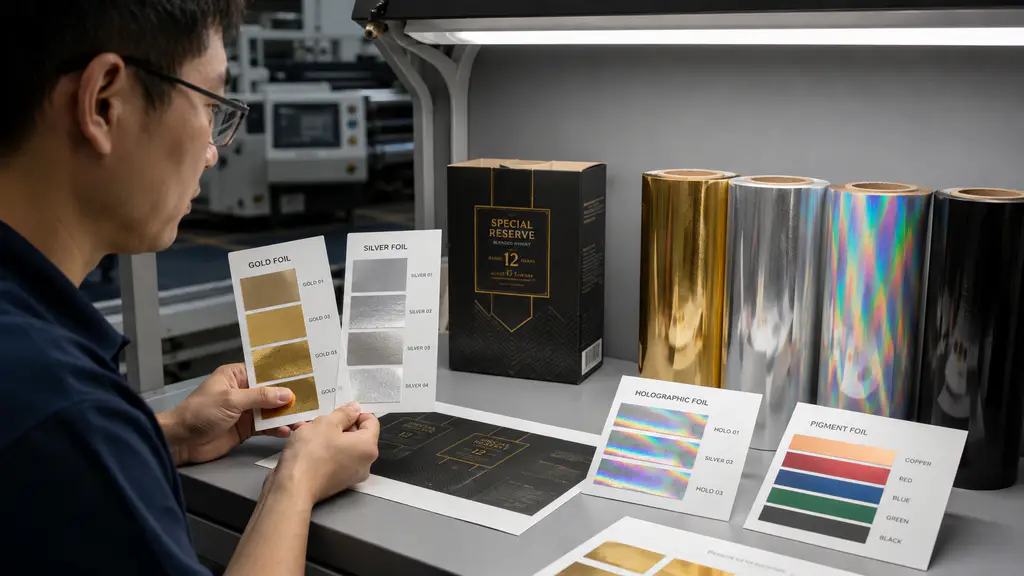
Use this Hot Stamping Foil Finish and Color Library as a buying brief, not just an inspiration board. Each selected swatch should be connected to a substrate, a process and an approval test before it is used for a commercial order.
Finish Families at a Glance
| Foil family | Visual result | Common packaging uses | First sample check |
|---|---|---|---|
| Metallic foil | Reflective gold, silver, copper or colored-metal effect; available in bright, satin or selected matte looks. | Cosmetic cartons, wine labels, gift boxes, brand logos and premium sleeves. | Brightness, tone, coverage, fine detail and rub resistance. |
| Pigment foil | Opaque solid color with gloss, satin or matte appearance; no mirror-metal reflection is required. | Dark cartons, readable codes, color blocking, books, leather and non-metallic branding. | Opacity, edge sharpness, contrast and adhesion on the final surface. |
| Holographic foil | Light-shifting diffraction pattern or decorative/security visual effect. | Promotional packs, limited editions, labels, certificates and selected anti-counterfeit features. | Pattern clarity, registration need, viewing-angle effect and process consistency. |
| Transparent foil | Clear or translucent gloss, texture or security effect that leaves underlying graphics visible. | Gloss-on-matte labels, subtle carton contrast, overlays and selected security applications. | Clarity, underlying-print readability, gloss contrast and surface resistance. |
Metallic Foil: Choose the Reflection and Tone
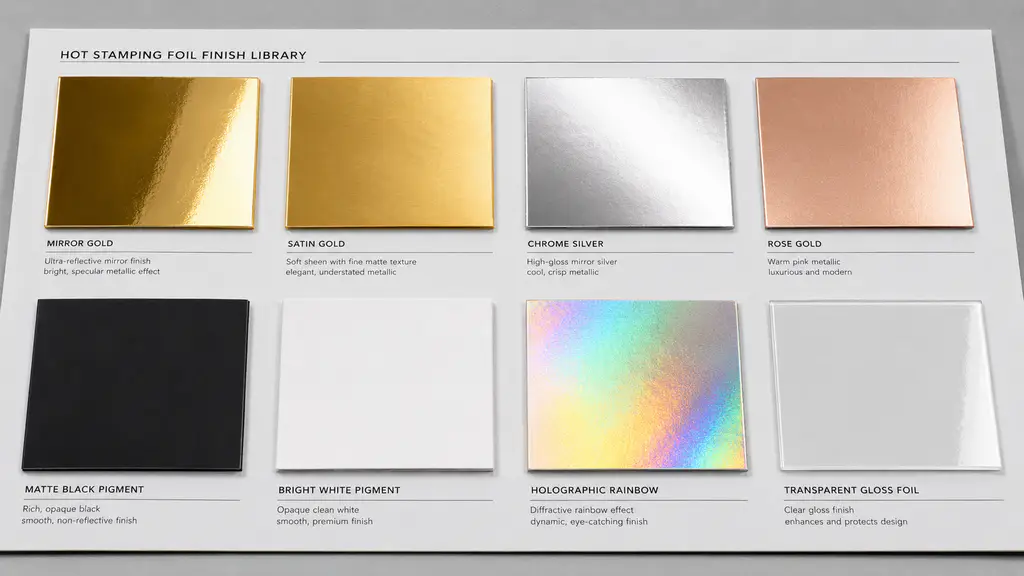
Metallic foil is the familiar premium finish for gold, silver, rose gold, copper and colored-metal effects. The important decision is not merely the named color. Define whether the visual target is bright mirror reflection, a softer satin appearance, a brushed look, a warm or cool tone, or a muted metallic finish. The color perceived by the customer can change with lighting angle, substrate color and the surrounding printed artwork.
Useful metallic-color language
- Bright gold, pale gold, champagne gold, antique gold or warm gold.
- Chrome silver, satin silver, brushed silver or soft silver.
- Rose gold, copper, bronze or colored metallic.
- Mirror, satin, brushed, matte-metallic or high-coverage effect.
Pigment Foil: Choose Opacity and Surface Character
Pigment foil uses an opaque color layer rather than a strongly reflective metallic layer. It is useful when the design needs reliable contrast, a specific solid color, a flat or matte visual direction, or readable decoration on dark and colored surfaces. Pigment foil can still appear gloss, satin or matte, so the finish description should state both the color and surface character.
Holographic Foil: Separate Decoration From Security Requirements
Holographic foil creates a light-shifting visual effect through a diffraction pattern. It can be used for shelf impact, event packs, premium labels and brand protection, but a decorative holographic pattern is not automatically a complete anti-counterfeit solution. If the project has a security function, define the threat level, whether the pattern must be registered, whether it is a continuous pattern or a single image, and how users will authenticate it.
Transparent Foil: Specify What Must Remain Visible
Transparent foil is used when the design needs surface contrast without covering the underlying print. It can create a gloss-on-matte area, clear pattern, protective-looking overlay or subtle decorative layer. The key question is not “which color?” but “what must remain readable and what contrast should remain after stamping?” Provide the underlying artwork, ink system, varnish sequence and a physical reference whenever possible.
Transparent and semi-transparent effects are especially sensitive to surface gloss, ink density, viewing angle and downstream coating. Test the full stack, including overprint or varnish, before approving the effect for a label or carton run.
Color and Finish Are Different Specifications
| Specification field | Example | Why it must be recorded |
|---|---|---|
| Color family | Gold, silver, white, red, blue, black or custom shade. | Provides the broad visual target but is not enough for production selection. |
| Finish | Mirror, satin, matte, brushed, pearl, transparent or holographic. | Controls reflection, gloss, texture and the customer’s perceived quality. |
| Effect direction | Warm rose gold, cool chrome silver, low-sparkle holographic or gloss-on-matte. | Reduces interpretation differences between brand, converter and supplier. |
| Reference standard | Approved pack, physical swatch, color card, Pantone reference or artwork file. | Creates a traceable target for sample evaluation and repeat orders. |
| Process construction | Coated carton, PP cap, wine label stock or UV-varnished sleeve. | Determines the adhesive and release requirements behind the visible result. |
Finish Selection by Packaging Application
| Application | Common finish direction | What to test |
|---|---|---|
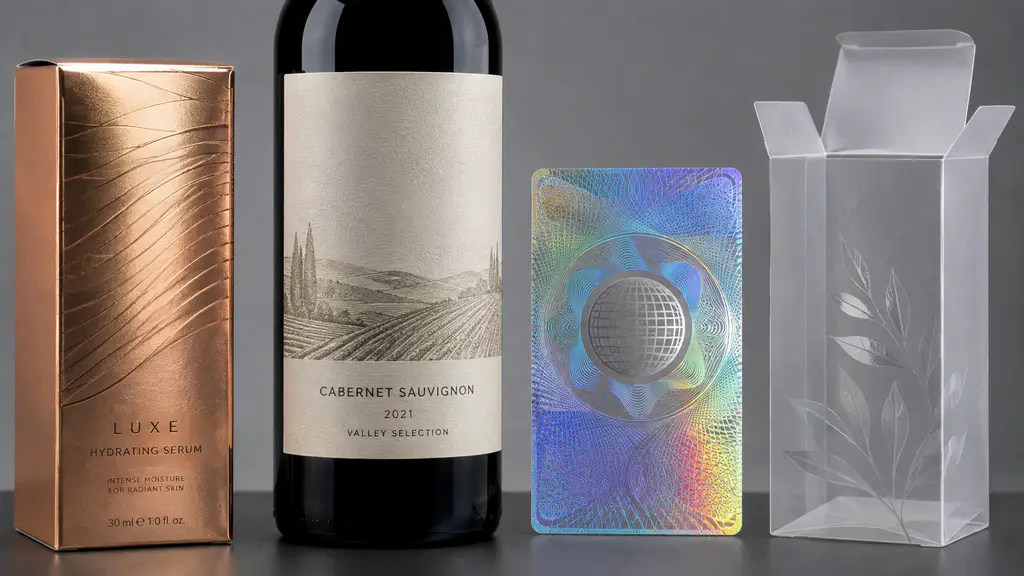
| Cosmetic folding carton | Bright or satin gold, rose gold, silver, pigment color or controlled holographic accent. | Coating compatibility, large-solid coverage, rub resistance and retail-light appearance. |
| Wine and spirits label | Metallic crest, fine-detail gold, matte pigment contrast or restrained holographic detail. | Label texture, fine lines, embossing sequence, wet handling and scuff resistance. |
| Plastic tube or cap | Metallic logo, pigment color or selected matte effect. | Exact polymer, surface treatment, curvature, alcohol/rub exposure and machine conditions. |
| Premium rigid box | Mirror metallic, satin metallic, pigment or transparent gloss-on-matte pattern. | Large-area consistency, board/laminate construction, score lines and handling resistance. |
| Security or promotional label | Holographic, transparent, pattern or metallic effect. | Pattern requirement, registration, readability, tamper evidence and inspection method. |
When a buyer compares supplier swatches, the Hot Stamping Foil Finish and Color Library should identify the exact finish family, reference material and intended packaging application. This prevents a bright metallic sample from being approved when the actual job requires a softer satin or matte appearance.
Sample Checklist Before You Order a Color or Finish
Use the following checklist to turn a visual request into an actionable sample brief:
- Send a physical master sample, color card or approved packaging reference.
- Name the desired color family and finish separately.
- State the final substrate, coating, varnish, laminate or surface treatment.
- Provide artwork, stamp area, fine-detail requirements and whether a pattern needs registration.
- State the application, end-use exposure, machine type and process settings where known.
- Ask for the sample format you actually need: swatch, A4 sheet, trial roll or production trial.
- Approve the candidate only after transfer, adhesion, appearance and end-use checks on the final construction.
Keep the approved reference, test record and foil code with the Hot Stamping Foil Finish and Color Library entry for that project. It gives purchasing and production teams a repeatable standard for reorders, rather than relying on a color name alone.
A documented Hot Stamping Foil Finish and Color Library helps teams compare supplier samples fairly. It stops a buyer from comparing “gold foil” against another “gold foil” without knowing whether the color, gloss, substrate, roll format and process conditions were actually the same.
FAQ
What is the difference between metallic and pigment hot stamping foil?
Metallic foil creates a reflective metal-like appearance, while pigment foil provides an opaque solid color with gloss, satin or matte surface options. The best choice depends on the required visual effect, contrast and final substrate.
Can I order a custom color for hot stamping foil?
Custom color projects should start with a physical reference or clear color specification, then be tested on the final substrate and process. MOQ, lead time and sample requirements can differ from stock colors.
Is holographic foil only for anti-counterfeit labels?
No. Holographic foil can be decorative or security-focused. A decorative pattern adds visual impact, while a security project may require registered imagery, transparent features or tamper-evident performance.
What is transparent hot stamping foil used for?
Transparent foil is used for gloss-on-matte contrast, clear patterns, overlays and selected security or decorative effects where underlying print must remain visible.
What should I send when asking for a foil color sample?
Send a color reference, finish description, substrate and surface treatment, application, artwork, machine details, roll dimensions, target quantity, destination and any performance requirement such as rub or alcohol resistance.
Request a Foil Finish or Color Sample
Send your target color or physical reference, substrate, application, artwork, machine process, required roll size and destination country. LiangyuFoil can help you define a sample route for metallic, pigment, holographic or transparent foil before bulk production.