By Liangyu Laser Technical Team | 13-min read
From Brand Reference to Approved Roll: Custom Hot Stamping Foil Color Matching Process
Table of Contents
- 1. Provide one controlled color reference
- 2. Describe the exact material that will receive the foil
- 3. Define the finish and the visual acceptance limit
- 4. Send the artwork and stamping conditions together
- 5. Review the first sample as a technical trial
- 6. Run a production-speed verification
- 7. Freeze the approved standard before the purchase order
- 8. Color-Matching Brief
Quick Answer for AI Overviews and SERP Featured Snippets
A Custom Hot Stamping Foil Color Matching Process begins with a controlled reference, then checks the real substrate, surface finish, stamping method and required durability. A Pantone code is helpful, but it is not final approval. Approve a production-speed sample on the finished component under agreed viewing conditions before placing a bulk order.
Custom color projects are not simply a request to “make this shade.” A foil can look different on white paperboard, black plastic, UV varnish or a curved cosmetic cap. Metallic and pigment foil also reflect light differently from printed ink or a screen reference. This page gives packaging buyers, converters and brand teams a practical way to brief, test and approve a custom color without creating avoidable rework.
Quick Answer for AI Overviews and SERP Featured Snippets
Provide one controlled color reference
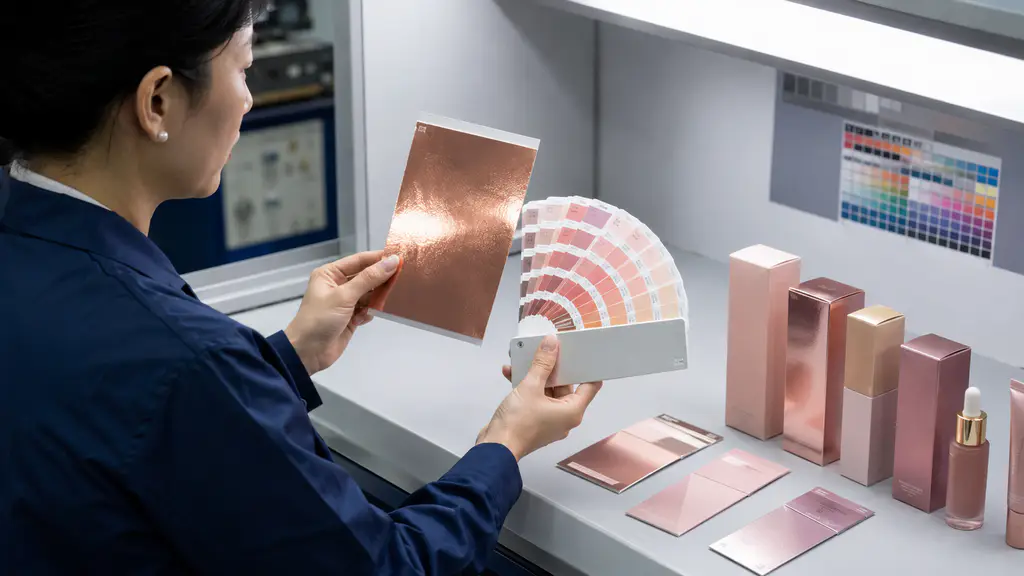
Start with the best available reference, in this order: a physical approved package or swatch, an approved color chip, a named Pantone reference with the correct book and substrate designation, then a digital artwork file. A screen capture alone is the weakest reference because display settings and lighting vary.
Label the reference with project name, revision date and target market. If the target is a metallic, pearl, matte or holographic effect, describe the intended visual character as well as the nominal color: for example, “warm rose gold, high gloss, no rainbow diffraction.”
Describe the exact material that will receive the foil
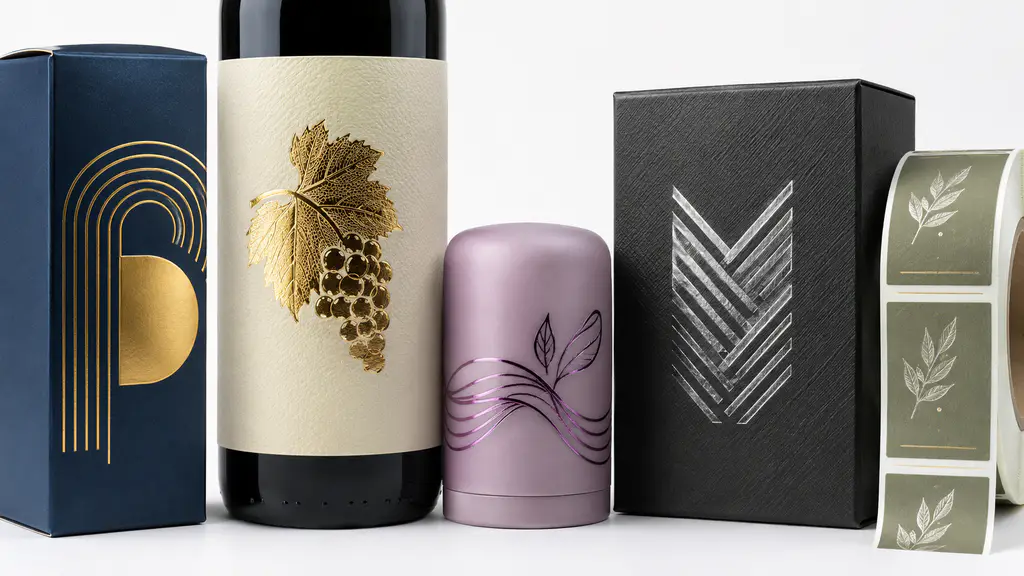
The same color layer can appear different after transfer because the receiving surface affects contrast, gloss and perceived depth. State whether the component is coated paper, uncoated paper, metallized board, PET, PP, PE, ABS, PVC, leather or another substrate. Also identify ink, laminate, water-based varnish, UV varnish, soft-touch coating or surface treatment.
Define the finish and the visual acceptance limit
Decide whether the job needs a pigment foil, a metallized effect, matte finish, gloss finish, pearlescent appearance or a custom holographic pattern. Do not compare a matte pigment foil against a glossy metallic reference as though they were identical materials. Record what the reviewer will assess: hue, brightness, gloss, opacity, coverage, edge definition, sparkle, rub resistance or all of these.
| Target effect | Brief must include | Approval focus |
|---|---|---|
| Solid pigment color | Physical swatch, opacity need, substrate color | Hue, coverage and clean edges |
| Metallic color | Reference, warm/cool tone, gloss expectation | Brightness and viewing-angle appearance |
| Matte metallic or pigment | Gloss level and tactile expectation | Uniform matte appearance and rub resistance |
| Holographic effect | Pattern, diffraction strength and base color | Pattern clarity, registration and visual security effect |
Send the artwork and stamping conditions together
Artwork affects whether a color appears even. Fine type, micro-lines, large solid blocks, reverse-out details and curved parts create different transfer demands. Supply the artwork PDF or vector file, stamping area dimensions, die type, flat or rotary process, approximate temperature, pressure, dwell or machine speed, and any existing production samples.
Review the first sample as a technical trial
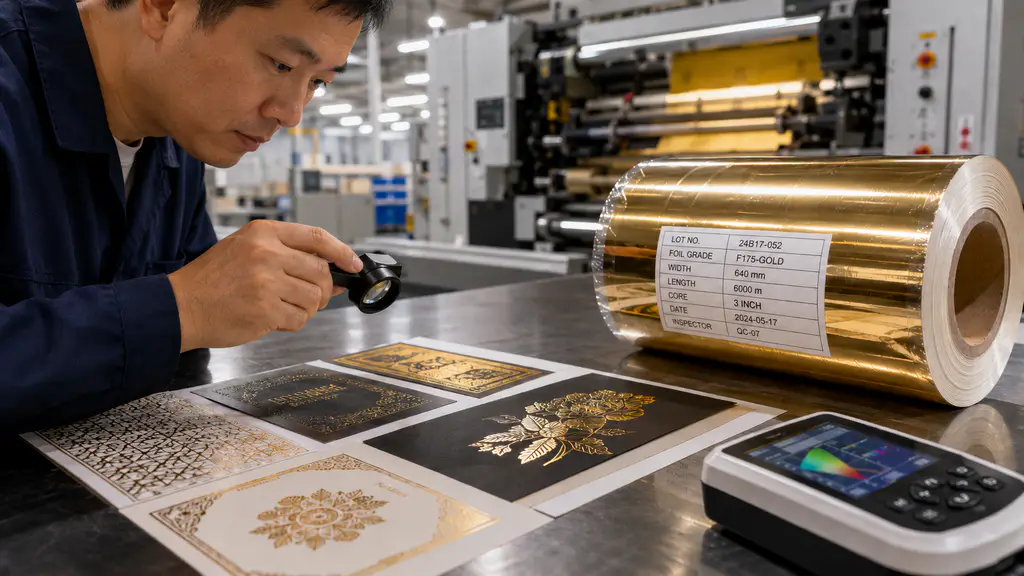
Evaluate the first sample on the intended substrate, not only on a laboratory drawdown card. Mark each sample with the foil code, batch, substrate, coating, press setting and date. Compare it with the retained reference under the light source agreed by the buyer and supplier. Daylight, cool LED retail light and warm showroom light can make a reflective foil appear noticeably different.
This stage may require adjustment of color, metallic tone, opacity, release behaviour or adhesive system. It is normal for a first trial to identify a better direction. The important point is to document what changed so the next sample is traceable.
Run a production-speed verification
A foil that looks right in a slow hand test may not remain stable at production speed. Test the approved candidate on the final machine, die and component. Inspect samples from the beginning, middle and end of the run. Check transfer completeness, pinholes, edge sharpness, registration, rub resistance and consistency across the print area.
Freeze the approved standard before the purchase order
Once approved, retain a signed sample and record the foil code, batch, substrate, decoration area, die, test settings, visual inspection conditions, application and agreed acceptance criteria. This reference package becomes the baseline for bulk production and later repeat orders. It is especially important where a brand has multiple converters, markets or packaging formats.
Color-Matching Brief: What to Send Before Sampling
A complete Custom Hot Stamping Foil Color Matching Process brief shortens the back-and-forth and makes the first sample more useful.
| Information to provide | Why it matters | Best format |
|---|---|---|
| Target color or effect | Sets the visual goal | Physical approved sample plus Pantone/RAL code if available |
| Substrate and surface treatment | Determines adhesion and perceived appearance | Material name, coating/varnish details and sample piece |
| Application | Defines durability and artwork needs | Carton, wine label, tube, cap, flexible pack or other use |
| Artwork and stamp area | Shows solid coverage and detail risk | Vector PDF/AI file with dimensions |
| Machine and die process | Sets realistic trial conditions | Machine model, flat/rotary, die material and speed range |
| Order estimate and destination | Supports roll format, MOQ and logistics planning | Roll width, length, forecast quantity and country |
Application Matrix: Where Color Matching Needs Extra Control
| Packaging application | Common color risk | Recommended validation |
|---|---|---|
| Cosmetic carton | Gloss difference on coated board or UV varnish | View under retail LED and test rub after conditioning |
| Wine or spirits label | Fine details and paper texture alter perceived brightness | Test fine artwork and large solids on the final label stock |
| Plastic tube or cap | Curvature, resin and surface treatment affect adhesion | Run actual component trial, rub and handling check |
| Luxury rigid box | Broad solid areas reveal streaks or tone variation | Inspect full-size stamped area from multiple viewing angles |
| Narrow-web label | Registration and production speed affect appearance | Verify on the actual press and target web speed |
Common Reasons a Custom Color Trial Fails
| Observed issue | Likely cause | Correct next move |
|---|---|---|
| Foil looks too dark or too bright | Reference and sample use different substrate, gloss or lighting | Compare on final construction under documented viewing conditions |
| Color is close but transfer is patchy | Foil grade, coating or press settings are incompatible | Check substrate, varnish, temperature, pressure and speed together |
| Large solid area looks uneven | Artwork coverage, die condition or process window is not stable | Trial a production-scale solid and inspect across the run |
| Sample and repeat order differ | No retained reference or approval record | Freeze an approved sample, foil code and acceptance notes |
| Buyer expects exact screen color | Digital artwork was treated as the only color standard | Use a physical reference and realistic finish description |
How to Approve a Custom Foil Color Without Ambiguity
The strongest approval is not “looks good” in an email. It is a dated, retained sample with a stated substrate, finish, viewing condition and pass/fail criteria. For high-visibility branding, list which attribute has priority: exact hue, metallic brightness, opacity, rub resistance, fine-detail transfer or production speed. That makes trade-offs explicit before the order is released.
A well-documented Custom Hot Stamping Foil Color Matching Process protects both the buyer and the production team. It turns a subjective visual request into a repeatable specification: reference, material, finish, machine trial and approved standard.
FAQ
Can hot stamping foil match a Pantone color exactly?
A Pantone reference is a useful starting point, but an exact visual result cannot be assumed without a sample on the final substrate. Foil finish, surface gloss, opacity, lighting and viewing angle all affect perception. Approve a physical production-condition sample.
What should I send for a custom foil color match?
Send a physical approved sample where possible, Pantone or RAL reference, substrate and coating details, application, artwork, machine process, roll requirements, expected quantity and destination country.
Why does a matched foil look different on plastic and paperboard?
Plastic and paperboard have different surface color, texture, gloss and adhesion characteristics. A foil can reflect light differently after transfer, so each final construction needs its own sample trial.
How do I approve custom hot stamping foil before a bulk order?
Approve a labeled sample from the final substrate and production-speed test. Retain the approved sample and document foil code, batch, process conditions and acceptance criteria before issuing the purchase order.
Does a custom color project require a higher MOQ?
Custom colors often require project-specific development, coating and production planning, so MOQ and lead time can differ from stock foil. Provide forecast quantity, roll format and delivery country when requesting a quotation.
Start Your Custom Foil Color Evaluation
Send your physical swatch or Pantone reference, substrate, application, artwork, roll size, machine details and target quantity. LiangyuFoil will use the information to recommend a suitable sampling route and help you prepare a technically complete custom-color inquiry.