By Liangyu Laser Technical Team | 15-min read
What Is Foil Stamping Used For? 12 Proven Applications in 2026
Table of Contents
A client called us last month. They’d spent $8,000 on new perfume packaging, and something looked off. The boxes were beautiful — thick paperboard, soft-touch coating, embossed pattern — but the gold logo looked… flat. Like it was printed, not premium.
What is foil stamping used for? It’s used to add metallic, pigment, holographic, matte, or specialty decorative effects to labels, packaging, cards, boxes, and printed products. It is commonly used for logos, product names, borders, seals, patterns, and luxury design details.
For labels and packaging, foil stamping helps products look more premium, attract attention on shelves, and create stronger brand recognition. It is widely used in cosmetics, wine and spirits, food packaging, health supplements, gift boxes, luxury stickers, paper bags, and promotional printing.
Whether you’re a brand manager choosing finishes for a new product line, a designer specifying decoration for a client, or a printer advising customers on options, understanding what is foil stamping used for helps you make better decisions — and avoid costly mistakes.
What Is Foil Stamping?
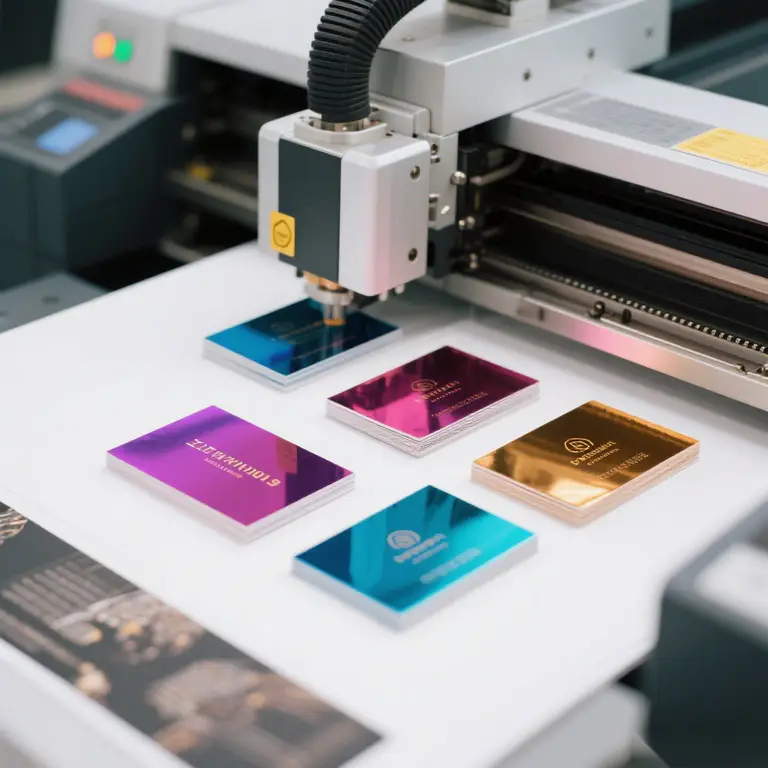
Before diving into applications, let’s clarify the process. Foil stamping is a dry finishing process that uses heat, pressure, a metal die, and foil film to transfer decorative effects onto a surface.
Unlike ink printing, which soaks into the substrate, foil sits on top — creating a distinct layer that catches light and adds physical texture. The result can be gold, silver, rose gold, holographic, matte, pigment, or completely custom effects.
Key characteristics:
- Foil is transferred onto the surface, not printed like ink
- It creates metallic, holographic, matte, pigment, or custom effects
- It is used as a finishing process after printing
- It works on many materials, including paper, cardboard, film, and some plastics
According to Wikipedia’s hot stamping reference, the process has been used since the late 19th century and remains one of the most reliable methods for adding premium decoration to printed materials.
Why Is Foil Stamping Used?
What is foil stamping used for at a strategic level? It’s used because it makes specific design elements stand out. It gives packaging a brighter, cleaner, and more premium appearance than standard ink alone.
Main reasons brands and printers choose foil stamping:
- To highlight logos and brand names
- To create a luxury packaging effect
- To improve shelf visibility
- To add metallic or holographic decoration
- To make labels look more valuable
- To create limited-edition or seasonal packaging
- To support anti-counterfeit or security design
- To combine with embossing, debossing, or spot UV
The effect is immediate and psychological. A gold logo on a black box signals quality before the customer reads a single word. A holographic seal on a supplement bottle suggests authenticity and care. These are not decorative choices — they are business decisions.
Foil Stamping for Labels
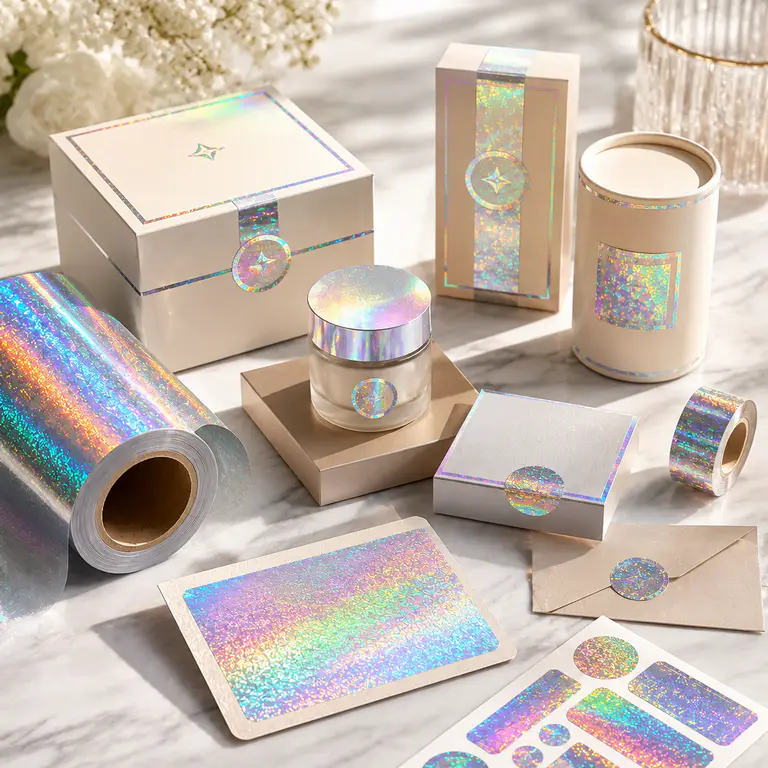
Labels are one of the most common answers to what is foil stamping used for. Even a small foil area can dramatically improve the perceived value of a product.
Common label applications include:
- Wine labels — Gold and silver foil for vineyard logos, vintage years, and award seals
- Cosmetic labels — Rose gold, champagne, and holographic effects for skincare and makeup
- Perfume labels — Metallic foil for brand names and decorative borders
- Candle labels — Matte gold and copper for artisan and luxury candle brands
- Food labels — Foil for gourmet and specialty food products
- Beverage labels — Silver and gold for premium water, juice, and craft drinks
- Health supplement labels — Holographic seals for authenticity and trust
- Luxury stickers — Full foil coverage for decorative and branding purposes
- Holographic labels — Rainbow and diffraction effects for limited editions
- Security labels — Tamper-evident and authentication designs
A gold logo, silver border, or holographic seal can make a simple label look significantly more premium. For small brands competing against established names, this visual upgrade can level the playing field.
Learn more about Liangyu Foil.
Foil Stamping for Packaging
Another major answer to what is foil stamping used for is packaging. In packaging, foil stamping is usually applied to the most visible areas — the brand logo, product name, decorative border, certification seal, or limited-edition mark.
Common packaging applications:
- Folding cartons — Cosmetic boxes, pharmaceutical packaging, consumer goods
- Cosmetic boxes — Skincare sets, makeup palettes, perfume packaging
- Perfume boxes — Rigid boxes with metallic logos and decorative patterns
- Chocolate boxes — Gold foil for premium and gift chocolate packaging
- Tea packaging — Elegant foil for specialty and gift tea boxes
- Wine and spirit packaging — Boxes, sleeves, and carriers with foil accents
- Gift boxes — Seasonal and occasion packaging with decorative foil
- Rigid boxes — High-end electronics, jewelry, and luxury goods
- Paper bags — Retail bags with foil-printed logos
- Product sleeves — Banding and wrap-around labels with foil details
The key principle: foil stamping draws the eye to what matters most. On a crowded retail shelf, the package with the gold logo gets picked up first.
Foil Stamping for Cosmetic and Beauty Products
Cosmetic packaging represents one of the highest-value applications for foil stamping. Beauty brands use foil to create a clean, high-end look and make small packaging details feel more refined.
Specific applications in cosmetics:
- Skincare boxes — Serums, creams, and treatment sets
- Makeup packaging — Eyeshadow palettes, lipstick cartons, compact cases
- Perfume labels and boxes — Brand names, fragrance notes, decorative elements
- Lipstick cartons — Metallic accents for premium positioning
- Beauty product stickers — Sample sizes, travel kits, promotional items
Popular foil effects in cosmetics include rose gold, champagne gold, silver, and holographic. These colors align with the soft, luxurious aesthetic that beauty consumers expect.
One important consideration: cosmetic packaging often uses coated or laminated surfaces. The foil grade must match the coating to ensure proper adhesion and durability. Testing on the actual substrate is essential.
Foil Stamping for Wine, Spirits, and Beverage Labels
Wine and spirits labels are classic foil stamping territory. The beverage industry has used gold and silver foil for decades to signal quality, tradition, and prestige.
Applications include:
- Wine labels — Vineyard logos, vintage years, regional seals
- Champagne labels — Gold foil for celebratory and luxury positioning
- Whiskey labels — Copper, bronze, and antique gold for heritage brands
- Craft beer labels — Holographic and metallic effects for standout designs
- Premium water labels — Silver and clear foil for minimalist luxury
- Limited-edition beverage packaging — Special foil for seasonal and collector releases
Foil stamping helps beverage labels stand out under retail lighting and gives bottles a premium shelf presence. In wine shops and liquor stores, where hundreds of bottles compete for attention, foil can be the difference between being noticed and being ignored.
Foil Stamping for Food Packaging
Food packaging uses foil stamping for decorative areas that enhance perceived quality and gift appeal.
Common applications:
- Chocolate packaging — Gold and colored foil for premium and gift chocolates
- Tea boxes — Elegant foil for specialty and ceremonial tea packaging
- Coffee bags — Metallic accents for artisan and single-origin positioning
- Bakery boxes — Decorative foil for celebration cakes and pastries
- Snack packaging — Holographic and metallic for trendy, youthful brands
- Specialty food labels — Gourmet oils, sauces, and condiments
- Gift food packaging — Holiday sets, corporate gifts, and hampers
Important note: Food packaging often uses foil stamping for decorative areas rather than direct food-contact surfaces. The substrate, coating, and final packaging structure should be tested before production to ensure compliance with food safety regulations.
Foil Stamping for Luxury and Gift Packaging
For luxury and gift packaging, the unboxing experience is part of the product. Foil stamping is useful when the package itself needs to feel like part of the gift.
Applications include:
- Rigid boxes — Jewelry, watches, and high-end accessories
- Jewelry boxes — Interior and exterior foil details
- Gift cards — Metallic logos and decorative patterns
- Boutique paper bags — Retail bags that customers want to keep
- Premium retail packaging — Bags, boxes, and tissue with coordinated foil
- Holiday packaging — Seasonal designs with gold, silver, and red foil
In this category, foil stamping is not just decoration — it’s part of the emotional experience. A beautifully foil-stamped gift box creates anticipation before the product is even revealed.
Foil Stamping for Business Cards, Invitations, and Printed Materials
While liangyufoil.com focuses on labels and packaging, foil stamping for stationery and printed materials is worth covering — it captures additional search traffic and demonstrates the versatility of the process.
Applications include:
- Business cards — Metallic logos and contact details for memorable first impressions
- Wedding invitations — Gold, silver, and rose gold for elegant celebrations
- Greeting cards — Seasonal and occasion cards with foil accents
- Book covers — Special editions and commemorative volumes
- Certificates — Official seals and award recognition
- Brochures — Foil for covers and key messaging
- Promotional cards — Direct mail and event materials with foil for higher open rates
What Materials Can Foil Stamping Be Used On?
Paper and Paperboard
The most common substrate. Used for labels, cartons, cards, bags, and boxes. Coated paper usually gives cleaner foil edges than uncoated stock. Uncoated paper can absorb adhesive unevenly, leading to patchy results.Plastic and Film
Used for some labels and packaging films. PP, PET, PVC, PE, and laminated materials need testing because adhesion and heat resistance differ from paper. The foil grade must be specifically formulated for plastic substrates.Textured Paper
Used for premium wine labels, luxury packaging, and boutique products. Fine details should be tested because rough surfaces can affect foil transfer. Textured surfaces require special techniques to achieve clean results.Laminated or Coated Surfaces
Used for cosmetic boxes, soft-touch packaging, and glossy packaging. The foil grade must match the coating or laminate surface. Some coatings repel standard foil adhesives, requiring specialized formulations.FAQs: What is Foil Stamping?
What is foil stamping mainly used for?
Foil stamping is mainly used to add metallic, holographic, pigment, or decorative effects to labels, packaging, cards, boxes, and printed products.
Is foil stamping used for labels?
Yes. Foil stamping is widely used on wine labels, cosmetic labels, food labels, beverage labels, perfume labels, candle labels, and luxury stickers.
Is foil stamping used for packaging?
Yes. Foil stamping is commonly used on cosmetic boxes, gift boxes, food packaging, folding cartons, rigid boxes, paper bags, and premium retail packaging.
Can foil stamping be used on plastic?
Yes, hot stamping foil is widely used for paper labels, wine labels, cosmetic labels, food labels, film labels, and premium stickers. It can make small label areas such as logos and product names look more valuable.
What products use gold foil stamping?
Gold foil stamping is often used for wine labels, cosmetic packaging, perfume boxes, chocolate packaging, luxury stickers, gift boxes, and premium paper bags.
What is holographic foil stamping used for?
Holographic foil stamping is used for decorative labels, promotional stickers, beauty packaging, security seals, authentication labels, and limited-edition packaging.
Can hot stamping foil be used with embossing?
Yes. Foil stamping can be combined with embossing to create a raised metallic logo, seal, or decorative pattern.
How do I choose the right hot stamping foil?
Choose based on substrate, visual effect, artwork detail, production process, and final use environment. For labels and packaging, testing on the actual material is the safest method.
If you are transitioning from hot stamping to cold foil, the learning curve is all about the UV glue and pressure balance.
Related Technical Resources:
📞 Contact our technical team → — Quote turnaround in 24 hours.
Need Foil Stamping for Your Labels or Packaging?
At Liangyu Foil, we manufacture hot stamping foil for all the applications covered in this guide. We offer free sample testing on your actual substrate, so you can verify performance before production. No minimum order. No guesswork.