By Liangyu Laser Technical Team | 13-min read
How Gold Foil Printing Works for Labels, Boxes and Packaging
Table of Contents
Gold remains one of the most familiar premium signals in packaging. It can make a fragrance carton feel refined, help a wine label catch light, create a high-value cosmetic logo, or add a security-like accent to a branded seal. But “Gold Foil Printing” is not one single production process. That distinction matters before a designer promises a mirror effect, a converter selects a press, or a buyer requests a quotation.
Quick Answer: Which Gold Foil Method Should You Choose?
Choose hot foil stamping when the pack needs the richest metallic reflection, sharp edges, tactile pressure or embossing. Choose cold foil when a label printer needs high-speed, inline metallic decoration and optional overprinting. Choose digital foil or sleeking for short runs, prototypes or variable artwork where a dedicated die is not economical. The right foil still has to match the exact substrate and finishing layer.
What Does Gold Foil Printing Mean?
Gold Foil Printing is commonly used as a broad description for adding a metallic gold surface effect to printed packaging. In a production specification, however, buyers should name the actual process. A hot foil job uses a heated die and pressure. A cold foil job uses adhesive and UV curing on press. A digital foil job uses a digital adhesive or toner-reactive workflow, depending on the equipment.
Gold Foil Printing Methods: Hot Foil vs Cold Foil vs Digital Foil
| Method | How It Transfers | Best Packaging Uses | Buyer Watch-Out |
|---|---|---|---|
| Hot foil stamping | A heated die transfers foil with heat and pressure. | Luxury cartons, wine labels, cosmetic boxes, gift packaging and fixed artwork. | Requires a die and controlled setup; allow for tooling and a production trial. |
| Cold foil printing | UV-curable adhesive receives foil inline, then the adhesive is cured. | Narrow-web labels, high-volume packaging and designs that need overprinting. | Adhesive, UV energy, registration and substrate surface must work together. |
| Digital foil / sleeking | Foil bonds to digital adhesive or toner through compatible equipment. | Short runs, mock-ups, personalization, seasonal packs and variable artwork. | Appearance and durability vary by press, toner, substrate and finishing workflow. |
Where Can Gold Foil Be Used?
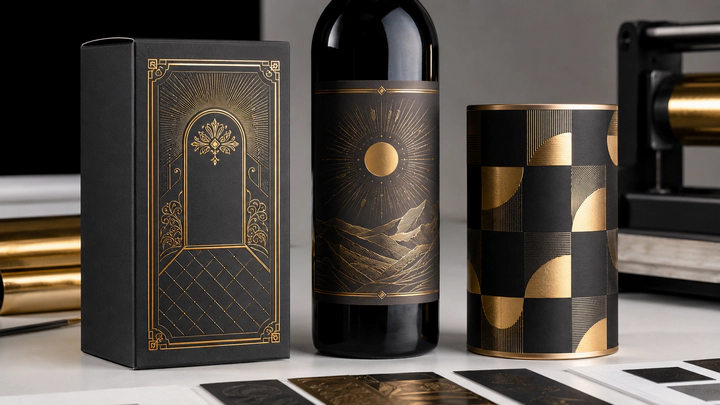
A gold effect is only as reliable as the surface beneath it. Coating, lamination, surface energy, texture and final use all influence transfer and durability. A swatch that looks good on coated paper may fail on a soft-touch laminate or a low-surface-energy plastic cap. Use the same board, label stock, varnish and print sequence planned for production when testing.
| Substrate or Product | Suitable Methods | Typical Gold Effect | Pre-Production Check |
|---|---|---|---|
| Coated paperboard cartons | Hot foil, cold foil, selected digital foil | Bright logo, border or full design accent | Check smoothness, coating type, fold cracking and rub resistance. |
| Pressure-sensitive labels | Cold foil, hot foil, digital foil | Metallic wine, beverage, cosmetic or specialty labels | Confirm press method, adhesive, overprint and registration tolerance. |
| Cosmetic boxes with lamination | Hot foil, selected cold foil | Premium gold logo, fine lines and decorative panels | Test the exact lamination for adhesion, scratch resistance and color appearance. |
| Plastic tubes, caps and rigid packs | Compatible hot stamping foil | Durable gold branding or functional decoration | Identify resin, surface treatment, mould-release risk and heat sensitivity. |
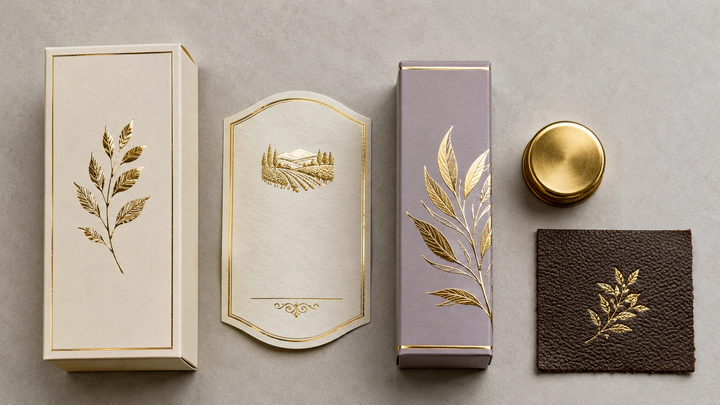
| Leather or coated specialty material | Compatible hot foil stamping | Refined marks, logos and small decorative areas | Check texture, pressure response, flexibility and wear after bending. |
How to Choose the Right Foil and Process
Buyers make faster decisions when they separate the visual brief from the production constraints. Start with the substrate and application. Then assess run length, effect, durability and tooling tolerance. Do not choose a foil purely from a screen image or a generic color name; gold can look warm, pale, champagne, satin or mirror-bright under different lighting and surface conditions.
| Decision Factor | Ask This Question | Practical Direction |
|---|---|---|
| Substrate | What is the final board, label stock, film, plastic or laminate? | Send an unprinted sample and name every coating or varnish layer. |
| Order quantity | Is this a one-off promotion, a mid-volume run or repeat production? | Hot foil tooling becomes easier to justify as stable repeat volume grows; digital processes suit flexible short runs. |
| Visual target | Do you need mirror shine, satin luxury, a warm champagne gold or an overprinted metallic? | Approve a physical drawdown or machine sample under the intended retail lighting. |
| Artwork | Are there hairlines, reverse text, solid blocks, embossing or close registration? | Test the smallest details and the largest solid foil areas, not only the logo. |
| Durability | Will the pack face scuffing, alcohol, moisture, filling lines or flexing? | Define the relevant tape, rub, scratch, chemical and bend checks before sign-off. |
| Budget | Does the budget include die, setup, make-ready, foil consumption and expected waste? | Compare the total production route rather than the price of a foil roll alone. |
Gold Foil Printing should be specified as an appearance and performance requirement: the target gold tone, gloss level, substrate, process, artwork detail, production conditions and acceptance tests. That gives a supplier enough information to recommend a grade instead of guessing from a photo.
Cost Drivers Buyers Should Understand
There is no universal price for a gold foil project. The finished-pack cost changes with the method, coverage area, die requirement, substrate, run length, press speed, waste allowance, color specification and quality testing. A low-cost foil can become expensive if it causes poor transfer, rework or downtime.
| Cost Driver | Why It Changes the Cost | What to Confirm |
|---|---|---|
| Tooling and setup | Hot foil needs a die; cold foil may need plates and press preparation. | Who owns tooling, expected life and time needed for approval? |
| Foil coverage and artwork | Large solid areas and inefficient layout can increase foil consumption and trial time. | Share the dieline and foil area, not only a visual mock-up. |
| Run length | Fixed setup costs are spread differently across short, medium and repeat orders. | State the annual forecast as well as the first order quantity. |
| Quality standard | Fine detail, close registration and high durability require more testing and control. | Agree on the sample approval standard before the production run. |
Common Problems and the First Checks to Make
| Symptom | Likely Cause | First Action |
|---|---|---|
| Foil does not transfer cleanly | Incompatible coating, insufficient heat or pressure, weak adhesive or unsuitable foil grade. | Verify substrate construction and run a controlled adjustment trial on the final material. |
| Patchy metallic coverage | Uneven surface, poor contact, textured board, low adhesive coverage or excessive speed. | Check solid areas and fine details separately; inspect pressure uniformity and surface texture. |
| Dull or wrong-looking gold | Gold tone mismatch, matte surface, overprint effect or unsuitable lighting reference. | Approve the physical sample beside the brand color target under agreed lighting. |
| Flaking, scratches or color loss | Inadequate adhesion, mechanical abrasion, chemical exposure or incompatible topcoat. | Run rub, tape and relevant exposure tests after the sample has fully stabilized. |
| Cost is higher than expected | Tooling, make-ready, waste, large coverage or an unsuitable process for the run length. | Review the complete process route and annual volume, not just foil price. |
If the issue is adhesion on coated materials, use the coated paper foil-transfer troubleshooting guide. In cold-foil production, adhesion depends particularly on the relationship among adhesive, substrate, curing and press conditions; the Iggesund hot foil technical reference is also useful background for planning a controlled trial.
Sample Checklist Before a Bulk Order
Do not approve from a foil swatch alone. A meaningful sample is a small production simulation that uses the final substrate, intended artwork, relevant finishing layers and representative machine conditions. Record the settings and keep an approved reference sample for later batch comparison.
- Send the exact substrate, including coating, lamination, varnish and print sequence.
- Provide vector artwork, foil coverage area and smallest line or reverse-text detail.
- State the process: hot foil, cold foil or digital foil, plus machine model where known.
- Describe the target finish: mirror, satin, matte, champagne, pale gold or another approved reference.
- Check transfer on fine lines, large solids, corners and registration-sensitive areas.
- Test adhesion after cooling or full curing, not immediately after application.
- Run the relevant rub, tape, scratch, bend, chemical or moisture test for the real end use.
- Compare the sample under expected retail lighting and against the approved packaging color.
- Retain a signed sample and recorded settings before releasing a bulk order.
FAQ
What is Gold Foil Printing?
It is a common buyer term for creating a metallic gold effect on packaging, labels or printed products. In practice, it can mean hot foil stamping, cold foil printing or a digital foil process. The exact method should be stated before sampling and quoting.
Is Gold Foil Printing the same as hot foil stamping?
Not always. Hot foil stamping is one method used to create gold foil effects. It uses a heated die and pressure. Cold foil and digital foil can also create a gold metallic appearance, but they use different transfer systems and offer different speed, tooling, texture and durability characteristics.
Can gold foil be used on labels and packaging boxes?
Yes. It is widely used on pressure-sensitive labels, wine labels, folding cartons, cosmetic boxes and gift packaging. The selected method must match the substrate, coating or lamination, run length, artwork detail and performance requirement.
How much does Gold Foil Printing cost?
Costs depend on the foil method, die or plate requirement, foil coverage, artwork, substrate, production volume, machine setup, quality tests and waste allowance. A complete quotation should be based on the actual pack specification rather than a generic per-roll comparison.
What should I send when requesting gold foil samples?
Send the final substrate or a representative sample, application description, target color and finish, process or machine details, artwork, planned quantity, destination country and any durability requirement. Photos of an existing issue are especially useful for troubleshooting.
Request a Gold Foil Recommendation or Sample Review
Send LiangyuFoil your substrate, application, target gold effect, process or machine, artwork details, estimated quantity and photos of any current issue. Our technical team can recommend a suitable foil route and help define a sample trial before bulk production.