By Liangyu Laser Technical Team | 13-min read
How to Compare Hot Stamping Foil Grades Before You Order
Table of Contents
- 1. What a Useful Foil Grade Specification Should Include
- 2. Hot Stamping Foil Grade Specifications: Buyer-Side Grade Families
- 3. Start With the Surface, Not the Foil Color
- 4. Match the Grade to Artwork, Not Just to the Substrate
- 5. Use the Machine as Part of the Specification
- 6. Common Reasons a Foil Grade Fails in Production
- 7. How to Move From a Grade Shortlist to Bulk Approval
Hot Stamping Foil Grade Specifications should define more than a color and roll width. A useful specification records the compatible substrate and surface treatment, visual finish, release and adhesion needs, process window, durability target, roll format and sample-approval requirements. The correct grade is confirmed by testing on the final production material, not by matching a color card alone.
Buyers often ask for “gold foil” or “silver foil” as though those names identify a complete production material. They do not. Two foils can look similar in a swatch book yet perform differently on coated board, PP, PET, leather, a varnished carton or a textured surface. This guide turns a general foil request into a practical technical brief for packaging converters, label printers, finishers and purchasing teams.
What a Useful Foil Grade Specification Should Include
A foil grade is a supplier-specific material construction designed for a defined transfer situation. There is no universal grade-number system that works across all foil suppliers, all machines and all surfaces. Instead of asking only for a product code, describe the performance the job requires: clean fine-detail release, stable large-area coverage, adhesion to a coated or film surface, flexible transfer after bending, pigment opacity, an overprintable surface, or a particular optical effect.
Hot Stamping Foil Grade Specifications are strongest when they connect each of these decisions:
| Specification Area | What to Record | Why It Matters |
|---|---|---|
| Substrate and surface | Material name, grade, coating, ink, varnish, lamination, topcoat or treatment. | Defines the surface that must accept the foil adhesive layer. |
| Finish target | Metallic color, gloss level, pigment opacity, matte effect, transparent finish or holographic pattern. | Prevents visual approval from being separated from the correct material family. |
| Artwork and coverage | Fine lines, small text, reverse gaps, solid areas, borders, embossing or security pattern. | Fine detail and broad coverage can require different release behavior. |
| Process window | Machine, die material, temperature range, pressure, dwell time, speed and foil tension where relevant. | Grade performance depends on real heat transfer and contact conditions. |
| Durability target | Rub, scratch, alcohol, moisture, heat, flex, wash or normal handling requirement. | Clarifies how the finished item must perform after stamping. |
| Roll format | Width, length, core size, winding direction, slitting tolerance and required quantity. | Helps the roll run correctly and reduces avoidable material waste. |
Hot Stamping Foil Grade Specifications: Buyer-Side Grade Families
The following families are a buyer-side way to organize a project brief. They are not universal product names or interchangeable codes. LiangyuFoil can use the information to recommend a suitable grade and sample plan, but the final grade must still be validated on the actual substrate and machine.
| Buyer-Side Grade Family | Typical Applications | Key Specification Focus | First Sample Checks |
|---|---|---|---|
| Paper and paperboard | Coated paper, cartons, rigid boxes, labels and printed wraps. | Coating compatibility, fine-line clarity, solid coverage and carton durability. | Adhesion, rub resistance, edge definition and interaction with coating. |
| Plastic and film | PP, PET, PVC, BOPP, cosmetic film labels and selected plastic packaging. | Surface treatment, adhesive match, heat sensitivity and overprint behavior. | Tape adhesion, scratch resistance, chemical exposure and distortion check. |
| Leather and synthetic leather | Genuine leather, PU, coated leather goods and accessories. | Texture, flexibility, abrasion resistance and finish stability. | Bend, rub and transfer-consistency checks on the real textured surface. |
| Textile and fabric | Garment decoration, fabric accessories and selected fashion surfaces. | Fabric type, transfer method, wash resistance and hand feel. | Adhesion after handling, stretch or wash checks where applicable. |
| Pigment and matte | Dark cartons, paper goods, labels and designs requiring opaque or low-gloss decoration. | Opacity, color approval, coverage, scratch resistance and batch consistency. | Color review on the final substrate and rub-resistance assessment. |
| Holographic and security | Security labels, certificates, premium packs and distinctive decorative applications. | Pattern visibility, registration, intended protection purpose and surface contrast. | Visual consistency, alignment and application-specific durability. |
Start With the Surface, Not the Foil Color
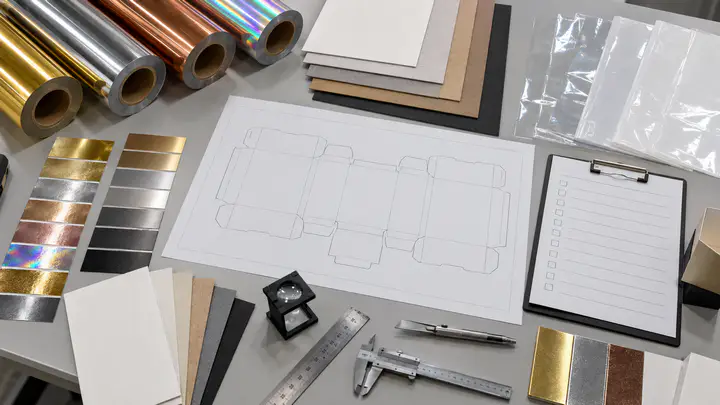
The substrate is the first filter. A foil that transfers cleanly on smooth coated board may not bond to matte lamination, UV varnish, untreated plastic or textured leather. The visible surface, not the general product category, is what the foil adhesive encounters during the stamp.
Match the Grade to Artwork, Not Just to the Substrate
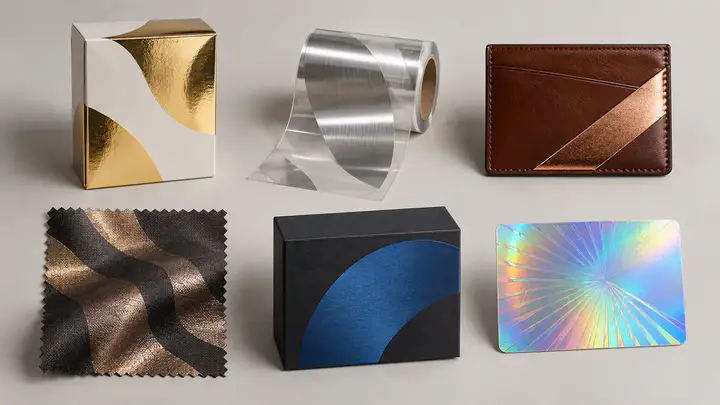
A single design may contain a small logo, fine positive text, reverse type, a narrow border and a large solid foil panel. Each feature tests the material in a different way. Fine details need clean release and sharp die contact; broad areas need uniform coverage and stable adhesion. A successful logo trial does not automatically prove that a full metallic panel will run well.
| Artwork Feature | Performance Need | What to Check Before Approval |
|---|---|---|
| Fine lines and small type | Controlled release and clean edge definition. | Broken lines, filled counters, blur and unwanted background transfer. |
| Large solid areas | Even coverage, stable gloss and reliable contact across the die. | Pinholes, patchiness, dull areas, pressure marks and foil consumption. |
| Long borders and corners | Consistent transfer with stable registration through turns and edges. | Corner breaks, shift, tension effects and uneven line thickness. |
| Foil plus embossing or folding | Transfer that remains stable through later forming and handling. | Cracking, lifting, distortion and damage near crease lines. |
| Holographic pattern | Correct visual orientation, registration and intended pattern visibility. | Pattern mismatch, low contrast, registration shift and wear after handling. |
Use the Machine as Part of the Specification
Hot Stamping Foil Grade Specifications should state the equipment and its real process range. A foil does not transfer by color alone: it responds to heat, pressure, dwell time, die contact, speed, make-ready and the condition of the stamped surface. Do not copy settings from a different job as though they were universal.
Start with the supplier’s suggested test window, then adjust one variable at a time. If transfer is incomplete, first inspect substrate cleanliness, surface compatibility, die contact and pressure distribution before applying excessive heat. More heat or pressure can sometimes improve transfer, but it can also dull gloss, spread edges, crush board or damage a heat-sensitive surface.
| Process Input | Record During the Trial | Why It Helps |
|---|---|---|
| Machine and die | Machine type, die material, die condition and make-ready. | Explains heat transfer, contact geometry and edge behavior. |
| Temperature | Set range and any change between samples. | Shows the activation condition without treating one setting as universal. |
| Pressure and dwell | Applied range, uniformity notes and contact time. | Separates poor contact from a material mismatch. |
| Speed and foil handling | Production speed, foil tension and unwind/rewind behavior where relevant. | Checks whether a sample result remains stable in a real run. |
| Post-process conditions | Overprint, varnish, folding, packing and exposure sequence. | Confirms the foil survives the rest of the production route. |
Common Reasons a Foil Grade Fails in Production
| What Went Wrong | Why the Result Is Unreliable | Better Next Step |
|---|---|---|
| A color card was approved without substrate testing. | Appearance and adhesion can change on the actual surface. | Test the final material, coating and artwork before release. |
| Ink, varnish or lamination was not disclosed. | The supplier cannot identify the true bonding surface. | Send a finished printed sample and list every surface layer. |
| Settings were copied from another job. | Machine contact and material response change by design and substrate. | Run a controlled test window and record each adjustment. |
| Durability was never defined. | Decorative transfer and high-rub or chemical-exposure performance are not the same requirement. | Agree on relevant rub, tape, scratch, alcohol, flex or wash checks. |
| Only fine text or only a solid panel was tested. | The sample did not represent the full artwork demand. | Test the smallest detail and the largest coverage area together. |
If the production symptom is poor transfer rather than an open specification question, start with LiangyuFoil’s coated-paper adhesion troubleshooting guide. It helps distinguish a grade mismatch from a coating, machine or process issue.
How to Move From a Grade Shortlist to Bulk Approval
- Shortlist by substrate. Remove grade families that do not match the final surface, coating or treatment.
- Confirm the visual target. Specify color, gloss, pigment opacity, transparency or holographic effect using an approved reference.
- Run a production-condition test. Use the intended artwork, die, material, process range and downstream finishing sequence.
- Inspect the correct acceptance points. Review coverage, edges, adhesion, gloss, color consistency and the durability checks relevant to the end use.
- Record the approved specification. Keep the foil code, batch reference, roll format, sample, settings and acceptance observations for repeat orders.

Frequently Asked Questions
What are Hot Stamping Foil Grade Specifications?
They are the technical and commercial details used to select a foil for a specific job: substrate, surface treatment, finish, artwork, process window, durability need, roll format and sample-approval requirements. A grade code alone is rarely enough for an accurate recommendation.
Can one foil grade work on every substrate?
No. A foil that works on coated paper may not perform on PP, PET, a laminated carton, textured leather or fabric. The final surface, artwork and process conditions must be tested for each application.
Should buyers choose foil by color first?
Color is a useful visual requirement, but it is not the first technical filter. Confirm the substrate and surface first, then match the required finish, artwork, process conditions and durability target.
What is needed for an accurate foil grade recommendation?
Provide the final material or sample, coating and ink details, artwork and coverage, machine and die information, target finish, roll dimensions, order quantity and required performance tests. Photos of any existing defect are also useful.
Why should a sample be tested before a bulk order?
A controlled sample verifies that the grade, substrate and production conditions work together. It can reveal transfer gaps, weak adhesion, edge problems, color changes or durability issues before they create waste in a full run.
Request a Foil Grade Recommendation Before Bulk Production
Send the actual substrate, surface treatment, artwork, target finish, stamping machine and die details, expected quantity, required roll format and relevant durability needs. LiangyuFoil can help define the specification inputs and a practical sample route for your project.