By Liangyu Laser Technical Team | 15-min read
Hot Stamping Foil Rolls: A Practical Buyer Guide for Packaging, Labels, and Leather Goods
Table of Contents
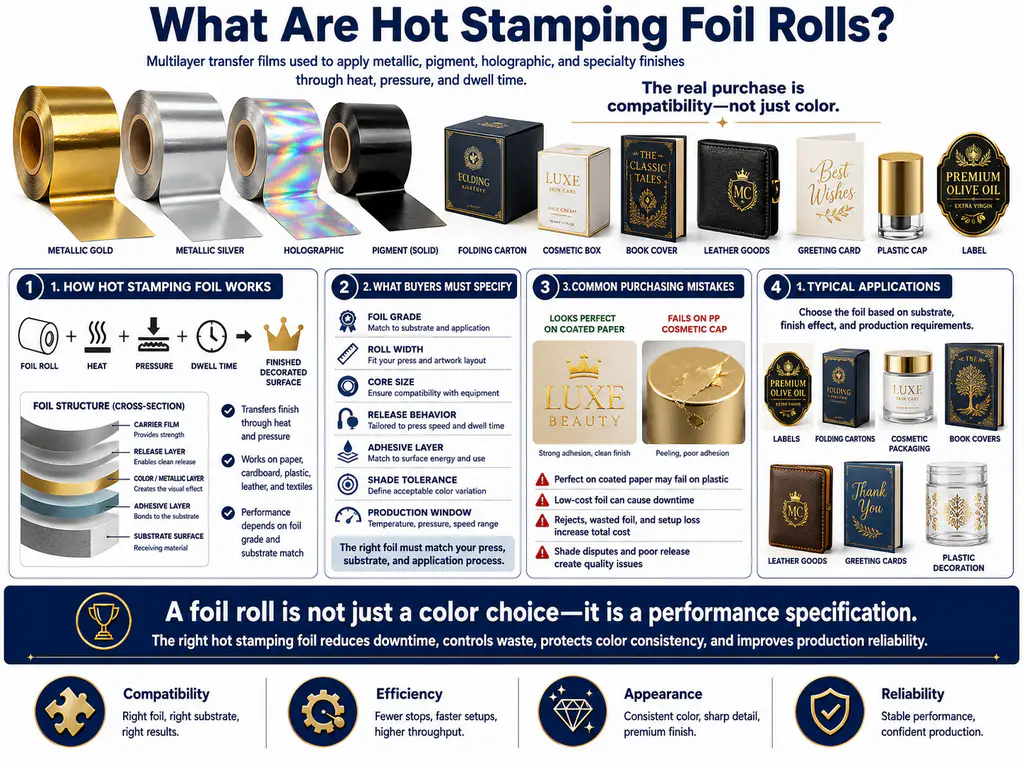
Hot stamping foil rolls are multilayer transfer films used to apply metallic, pigment, holographic, or specialty finishes onto paper, cardboard, plastic, leather, textiles, and packaging surfaces through heat, pressure, and dwell time. For a buyer, the roll is not just a color. The real purchase is compatibility: the right foil grade, roll width, core size, release behavior, adhesive layer, shade tolerance, and production window for your press and substrate.
That is where many purchasing mistakes begin. A gold foil roll that looks perfect on coated paper may peel from PP cosmetic caps. A cheaper roll can become expensive if it causes downtime, rejects, color disputes, or wasted foil during setup.
This guide explains how to specify hot stamping foil rolls before a bulk order, especially for labels, folding cartons, cosmetic packaging, book covers, leather goods, greeting cards, and plastic decoration.
What Are Hot Stamping Foil Rolls?
Hot stamping foil rolls are supplied in continuous rolls so a press can feed foil between a heated die and the target surface. During stamping, only the stamped area separates from the PET carrier and bonds to the substrate.
| Layer | Function | Buyer concern |
|---|---|---|
| PET carrier film | Supports the coating during winding and stamping | thickness, stability, clean feed |
| Release layer | Allows the image to detach from the carrier | easy release vs fine detail |
| Color or metallized layer | Creates gold, silver, pigment, holographic, or special effects | shade, gloss, opacity |
| Adhesive layer | Bonds the foil to the surface | substrate fit and durability |
For a process background, read LiangyuFoil’s What is Hot Foil Stamping? and Hot Stamping Foil Guide. A neutral external overview is also available on Wikipedia’s hot stamping page.
Why Roll Specifications Matter More Than the Color Name
Many inquiries begin with “gold foil rolls” or “silver hot stamping foil.” That is a start, but it is not enough for production. Two gold foils can share the same shade and still behave differently.
Before ordering, define these specifications:
- Roll width: match the stamped image and machine feed width while avoiding unnecessary waste.
- Roll length: balance changeover frequency, shipping cost, and inventory needs.
- Core inner diameter: confirm whether your machine needs 1 inch, 3 inch, or another core.
- Foil grade: metallic, pigment, holographic, matte, gloss, transparent, scratch-resistant, or chemical-resistant.
- Release type: easy release for solid coverage; tighter release for fine text and sharp edges.
- Adhesion type: matched to paper, coated board, label stock, plastic, leather, textile, or lacquered surfaces.
- Shade tolerance: critical for luxury packaging and repeat orders.
Common Types of Hot Stamping Foil Rolls
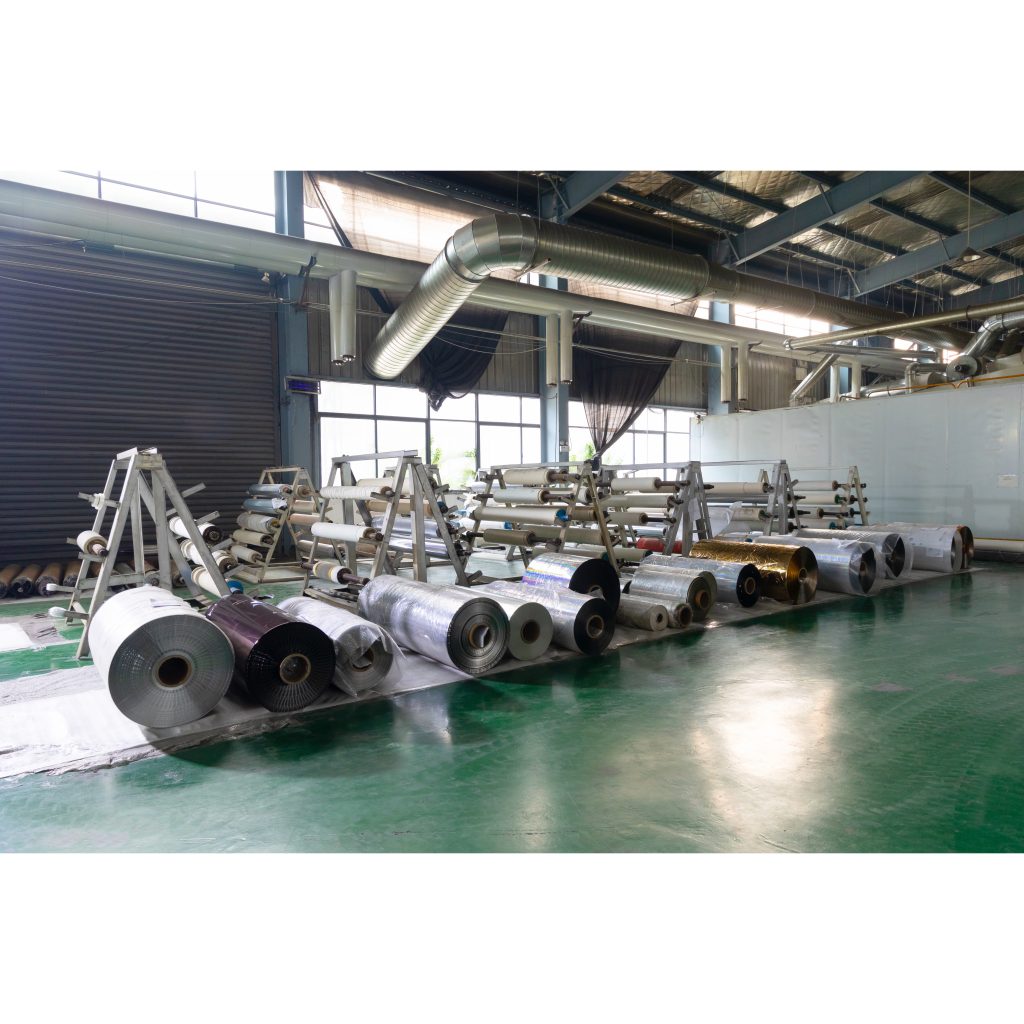
Metallic foil rolls are used for gold, silver, bronze, copper, rose gold, champagne, and custom metallic finishes on labels, cosmetics, wine packaging, cartons, business cards, and book covers. For a color-specific angle, see the Rose Gold Hot Stamping Foil guide.
Pigment foil rolls create solid colors without a metallic mirror effect. They are useful when a brand needs dense color, high opacity, or a clean logo on dark packaging.
Specialty foil rolls include matte metallic, laser, pearl, scratch-resistant, and alcohol-resistant grades. For cosmetic packaging exposed to alcohol, oils, or handling, use Alcohol-Resistant Hot Stamping Foil for Cosmetics as a reference.
Choose Hot Stamping Foil Rolls by Substrate
The substrate usually decides the foil grade. A foil that works on coated paper can still fail on untreated plastic or textured leather.
| Substrate | What to prioritize | Common risk |
|---|---|---|
| Coated paper | fine detail, gloss, shade consistency | pinholes, over-stamping |
| Folding carton | large-area release, scuff resistance | dull finish, uneven pressure |
| Label stock | speed stability, narrow-web compatibility | edge blur, poor rewind control |
| PP, PE, PET, ABS plastic | adhesion grade and surface treatment | peeling, incomplete transfer |
| Leather or PU leather | flexible adhesion and crack resistance | cracking on grain or texture |
| Textile or fabric | compatible adhesive and wash resistance | weak bond, color migration |
For leather projects, do not treat the roll as a generic craft material. Leather has grain, oils, coatings, and compression behavior. LiangyuFoil covers this in Foil Stamping on Leather and Foil Stamp Textured Leather. For setup, see How to Apply Hot Stamping Foil.
Roll Width, Release, and Production Waste
- Stamped image width: include the full design, not only the logo.
- Machine margin: leave enough edge clearance for stable feeding.
- Repeat distance: align foil advance with the design repeat.
- Order quantity: longer rolls reduce changeovers but need stable winding.
- Trial allowance: reserve foil for setup, approval, and color matching.
Sampling Checklist Before Bulk Orders
Sampling should copy real production conditions. A hand sample on coated paper does not prove the roll will work on a curved plastic cap, laminated carton, or oily leather surface.
Use this checklist before ordering:
- Test on the actual substrate, coating, and laminate.
- Run the real artwork, including small text and large solid areas.
- Test low, middle, and high temperature settings.
- Check adhesion after cooling, not only immediately after stamping.
- Rub the surface with a dry cloth and, if relevant, alcohol or oil.
- Inspect edge definition under strong light.
- Compare color with the approved standard roll or brand sample.
- Record machine speed, pressure, dwell time, die material, and humidity.
This trial data helps the supplier adjust the grade before mass production.
Supplier Questions Before Buying Hot Stamping Foil Rolls
A reliable supplier should answer technical questions clearly. If the answer is simply “this roll is universal,” be careful. Demanding packaging usually needs a more precise grade.
Ask these questions:
- Which substrates is this foil grade designed for?
- What roll widths, roll lengths, and core sizes are available?
- What is the MOQ for standard and custom colors?
- Can you provide sample rolls for machine testing?
- What temperature range should we test first?
- Is the release easy, medium, or tight?
- How stable is the shade between batches?
- Can you support custom slitting?
- What packaging protects the rolls during sea freight?
- What shelf life and storage conditions do you recommend?
For USA buyers comparing supply routes, LiangyuFoil’s Hot Stamping Foil Sourcing Guide USA is a useful companion. For broader industry context, the Foil and Specialty Effects Association provides educational resources on foil stamping, embossing, cold foil, coatings, laminates, and related print finishing technologies.
Storage and Handling
Hot stamping foil rolls should be stored in a clean, dry, temperature-stable room. Avoid direct sunlight, humidity, dust, solvent vapor, and pressure deformation. Keep rolls wrapped until use.
Good handling prevents blocking, uneven release, edge damage, static issues, and shade inconsistency. Track batch numbers for repeat orders and let rolls acclimate before production if they arrive from a cold warehouse.
Hot Stamping Foil Rolls vs Cold Foil and Digital Foil
FAQ
What size hot stamping foil roll should I buy?
Choose the roll width based on the stamped design width, machine feed allowance, and waste target. Choose roll length based on production volume and changeover tolerance. Always confirm the core inner diameter before ordering.
Are hot stamping foil rolls universal?
No. Some rolls work across common paper substrates, but plastic, leather, textile, laminated cartons, and cosmetic packaging usually need substrate-specific adhesive and release properties.
Why does my foil roll transfer unevenly?
Uneven transfer can come from the wrong foil grade, low temperature, insufficient pressure, short dwell time, uneven die contact, poor substrate coating, or damaged roll edges. Start by checking foil-substrate compatibility before increasing heat.
Can one gold foil roll work on both paper and plastic?
Sometimes, but not always. Paper and plastic have different surface energy and adhesion behavior. For plastic parts, request a foil grade tested on PP, PE, PET, ABS, or the exact material you use.
How should hot stamping foil rolls be stored?
Store rolls in a dry, dust-free, temperature-stable room, away from sunlight and heavy pressure. Keep rolls wrapped until production and track batch numbers for repeat color consistency.
Related Technical Resources:
📞 Contact our technical team → — Quote turnaround in 24 hours.
Need Hot Stamping Foil Rolls for Your Labels or Packaging?
Buying hot stamping foil rolls is not just choosing a shade from a catalog. The roll must fit the substrate, press, die, artwork, durability requirement, and production volume. A good supplier should help you test the right grade, slit the right width, confirm the core size, and record the stamping window before bulk production.